


Trump calls Ilhan Omar, US Somalis "garbage," claims they've ripped off Minnesota for billions
- Thread starter DesRicardo
- Start date

Minnesota was full of Scandinavians at one point, I don't know what happened with that. They were too woke for their own good. NY times is a lefty publication.
NY Times Admits Somalis Are ‘Raised in a Culture of Stealing’ Following Massive Welfare Fraud in Minnesota
Omar allies tied to massive Minnesota COVID meal fraud scheme involving Somali community
Individuals tied to Rep. Ilhan Omar, including a former campaign worker and associates of a Minneapolis restaurant she frequented, allegedly profited from the scheme.
Members of the inner circle of Rep. Ilhan Omar, D-Minn., personally profited from the $1 billion welfare fraud scandal in her district that has placed her Somali constituency under a White House microscope.
Omar held events at one of the restaurants named in the fraud, knew one of its now-convicted owners and had a staffer who was also convicted, the New York Post reported.
Omar also introduced the legislation that led to $250 million being defrauded from federal child-nutrition programs in COVID-19 aid, according to the newspaper.
Around $250 million in state funds was distributed beginning in 2020 to provide meals to schoolchildren during the pandemic. However, the money was allegedly pocketed by Salim Ahmed Said, the co-owner of Safari Restaurant, where Omar held her 2018 congressional victory party.
Said was convicted in March for his role in the scheme, with the Justice Department stating that the funds — intended to feed children — were used to finance a lavish lifestyle.
He spent much of the money on a $2 million Minneapolis mansion and a $9,000-per-month shopping habit at Nordstrom, according to prosecutors.
The free meals were made possible by the 2020 MEALS Act, introduced by Omar and passed with bipartisan support, the Post said.
Much of the funding was funneled through the now-defunct nonprofit Feeding Our Future, according to the DOJ. Omar appeared in a video promoting the program.
The congresswoman has not been directly linked to the fraud. Fox News Digital has attempted to reach her office for comment.
"The alleged fraud scheme orchestrated by Feeding Our Future is reprehensible. Using the guise of feeding children to funnel millions of dollars toward extravagant expenses is abhorrent, and anyone who participated in this scheme must be held accountable," Omar told a local Minnesota news outlet at the time.
During an appearance on CNN this week, Omar was pressed to explain how fraud became so rampant within her state.
"I think what happened, um, is that, you know, when you have these kind of new programs that are, um, designed to help people, you're oftentimes relying on third parties to be able to facilitate. And I just think that a lot of the COVID programs that were set up — they were set up so quickly that a lot of the guardrails did not get created," she said.
In August, Guhaad Hashi Said, a Democratic activist and former Omar campaign official, pleaded guilty to running a fake food site, Advance Youth Athletic Development.
"These Somalians have taken billions of dollars out of our country," Trump told reporters. "They’ve taken billions and billions of dollars. They have a representative, Ilhan Omar, who they say married her brother. She should be thrown the hell out of our country.
"And most of those people, they have destroyed Minnesota. She should not be — and her friend shouldn't be allowed — frankly, they shouldn‘t even be allowed to be Congresspeople, OK? They shouldn't even be allowed to be Congresspeople because they don’t represent the interests of our country."
 www.foxnews.com
NY Times Admits Somalis Are ‘Raised in a Culture of Stealing’ Following Massive Welfare Fraud in Minnesota
Omar allies tied to massive Minnesota COVID meal fraud scheme involving Somali community
Individuals tied to Rep. Ilhan Omar, including a former campaign worker and associates of a Minneapolis restaurant she frequented, allegedly profited from the scheme.
Members of the inner circle of Rep. Ilhan Omar, D-Minn., personally profited from the $1 billion welfare fraud scandal in her district that has placed her Somali constituency under a White House microscope.
Omar held events at one of the restaurants named in the fraud, knew one of its now-convicted owners and had a staffer who was also convicted, the New York Post reported.
Omar also introduced the legislation that led to $250 million being defrauded from federal child-nutrition programs in COVID-19 aid, according to the newspaper.
Around $250 million in state funds was distributed beginning in 2020 to provide meals to schoolchildren during the pandemic. However, the money was allegedly pocketed by Salim Ahmed Said, the co-owner of Safari Restaurant, where Omar held her 2018 congressional victory party.
Said was convicted in March for his role in the scheme, with the Justice Department stating that the funds — intended to feed children — were used to finance a lavish lifestyle.
He spent much of the money on a $2 million Minneapolis mansion and a $9,000-per-month shopping habit at Nordstrom, according to prosecutors.
The free meals were made possible by the 2020 MEALS Act, introduced by Omar and passed with bipartisan support, the Post said.
Much of the funding was funneled through the now-defunct nonprofit Feeding Our Future, according to the DOJ. Omar appeared in a video promoting the program.
The congresswoman has not been directly linked to the fraud. Fox News Digital has attempted to reach her office for comment.
"The alleged fraud scheme orchestrated by Feeding Our Future is reprehensible. Using the guise of feeding children to funnel millions of dollars toward extravagant expenses is abhorrent, and anyone who participated in this scheme must be held accountable," Omar told a local Minnesota news outlet at the time.
During an appearance on CNN this week, Omar was pressed to explain how fraud became so rampant within her state.
"I think what happened, um, is that, you know, when you have these kind of new programs that are, um, designed to help people, you're oftentimes relying on third parties to be able to facilitate. And I just think that a lot of the COVID programs that were set up — they were set up so quickly that a lot of the guardrails did not get created," she said.
In August, Guhaad Hashi Said, a Democratic activist and former Omar campaign official, pleaded guilty to running a fake food site, Advance Youth Athletic Development.
"These Somalians have taken billions of dollars out of our country," Trump told reporters. "They’ve taken billions and billions of dollars. They have a representative, Ilhan Omar, who they say married her brother. She should be thrown the hell out of our country.
"And most of those people, they have destroyed Minnesota. She should not be — and her friend shouldn't be allowed — frankly, they shouldn‘t even be allowed to be Congresspeople, OK? They shouldn't even be allowed to be Congresspeople because they don’t represent the interests of our country."
Omar allies linked to Minnesota COVID meal fraud scheme | Fox News
Members of Rep. Ilhan Omar’s circle were implicated in Minnesota’s massive COVID meal fraud scandal, though she is not accused of wrongdoing.
www.foxnews.com

Defund education and you end up with more racists

Somalis are a problem here too, brutal gangs
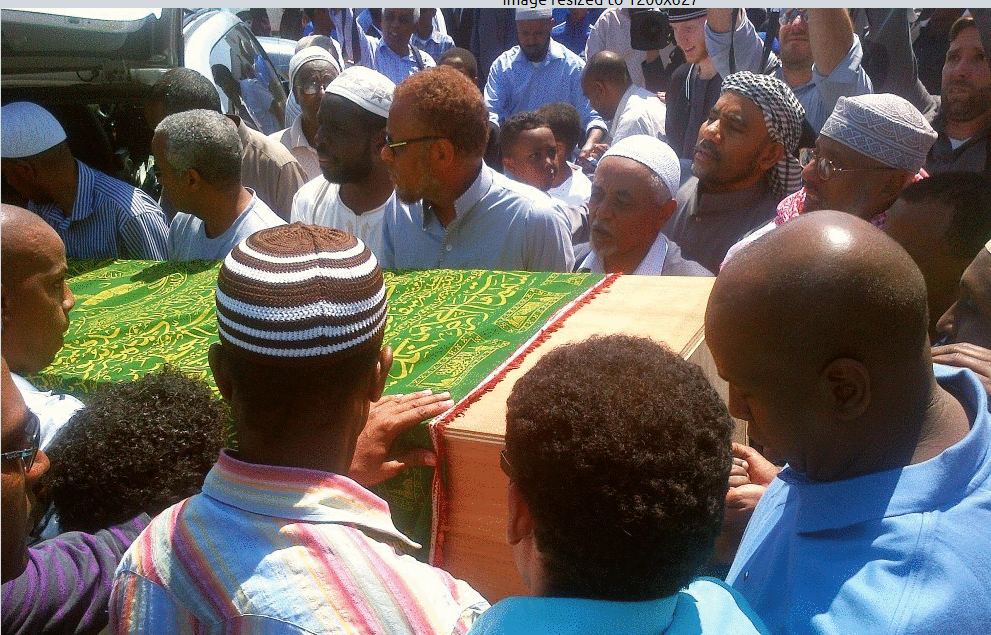
Another day, another funeral
Young Somali men are being killed at an alarming rate in Toronto and nearly half of their cases dating back more than a decade have gone unsolved.
It began like any other Friday.
Liban Abokor, 33, was getting set to attend prayers when his phone rang. It was his friend calling to say this time he wouldn't be joining him. Instead, he was on his way to Toronto's west end to attend the funeral of a young Somali man killed a week earlier — the 14th such death in the city in just two years.
"From God we come and to him we return," Abokor replied, offering the words of condolence they had both heard so many times before. "It feels like another Somali boy is being killed every other day, right?"
"It's almost become routine. Another day, another janazah," his friend replied solemnly, using the Arabic word for "funeral."
That was February 2016. Seventeen-year-old Saeid Kaylie had been fatally stabbed outside the highrise where he lived in the west Toronto neighbourhood of Etobicoke, his family left to grieve the loss of a young man whose life had only just begun.
But while two teens were charged with first-degree murder in Kaylie's death, a new report reveals 45 per cent of cases involving Somali victims of homicide in Toronto between 2004 and 2014 remain unsolved, compared to an average of 30 per cent for homicide cases in Toronto overall.

Of those, the overwhelming majority of victims were young men under 30.
The troubling findings are part of a six-month long study by a Toronto-based non-profit organization called Youth Leaps that aimed to capture the toll the deaths have taken on the community. Together with Abokor, the group's executive director, the all-Somali research team worked to develop what they say is the first-ever database of the city's Somali homicide victims.
The hope, at first, was to find out why. What was behind the killings of these young men? But the researchers quickly learned that there was a more immediate set of questions to answer: Just how many of them were dying and who were they?
The Toronto Police Service does not track homicides by specific ethnicity. Instead, its records are broken down only by race: white, black, brown, Asian, Aboriginal and unknown.
With no available breakdown of homicide victims by ethnicity, the group relied on a combination of publicly available statistical data, police records, news stories, focus groups and difficult conversations with victims' families to produce their own data — the first step in what they intend to be a much larger investigation. In all, the researchers connected with over 300 Somali youth across Ontario.
"This report has not looked at who is killing who or even why," Abokor said, referring to the report summarizing their findings released Wednesday. "We didn't pathologize. I don't think we have enough data to do that yet."
"This was a starting point." II.
The study makes some startling observations: Over a decade-long period between 2004 to 2014, Toronto grew significantly safer, with homicide rates dropping 12 per cent. Yet over the same period, the proportion of young Somali men among the city's homicide victims had climbed from 1.6 per cent to 16 per cent, a number that's disproportionately high for a community that represents less than one per cent of Toronto's total population.
Perhaps more alarming, Somali homicide victims are about 10 years younger than the national average age of homicide victims.
For the researchers, those statistics point to a disturbing trend: while Toronto was becoming safer overall, a crisis was quietly unfolding in the city's Somali community.
Just last year, Toronto was dubbed North America's safest city by The Economist magazine's 2017 safe cities index. The ranking came amid a spate of shootings in the community that cut two young lives short in a single week: that of 29-year-old Abdulkadir Bihi, a newlywed and soon-to-be father shot in broad daylight while visiting his mother and 16-year-old Zakariye Ali, fatally shot in an Etobicoke school parking lot.
Ali's case remains unsolved. But while two people were charged with 1st-degree murder last October in Bihi's case, a cousin of the victim who CBC has agreed not to identify says the family hasn't heard much about the progress of the case since and that justice feels far off.
Bihi's death is made all the more tragic by the fact that his first son was born just a month after he was killed and will never know his father, the 34-year-old cousin said.
For Abokor, the fact that most of the deaths involved young people flies in the face of a misconception he hears all too often: that the violence in the Somali community is imported into Canada by a newcomer population that fled war-torn Somalia. Instead, the victims are largely young men who were born in this country or have spent the majority of their lives here, he says.
"The evidence suggests that this is a Canadian problem, a Toronto issue," he said.
"This isn't an issue of a refugee or immigrant population that's having a hard time fitting in. These are Canadian-born kids who went to kindergarten here, drank soup from Tim Hortons and took the TTC to get around.”
 newsinteractives.cbc.ca
Another day, another funeral
Young Somali men are being killed at an alarming rate in Toronto and nearly half of their cases dating back more than a decade have gone unsolved.
It began like any other Friday.
Liban Abokor, 33, was getting set to attend prayers when his phone rang. It was his friend calling to say this time he wouldn't be joining him. Instead, he was on his way to Toronto's west end to attend the funeral of a young Somali man killed a week earlier — the 14th such death in the city in just two years.
"From God we come and to him we return," Abokor replied, offering the words of condolence they had both heard so many times before. "It feels like another Somali boy is being killed every other day, right?"
"It's almost become routine. Another day, another janazah," his friend replied solemnly, using the Arabic word for "funeral."
That was February 2016. Seventeen-year-old Saeid Kaylie had been fatally stabbed outside the highrise where he lived in the west Toronto neighbourhood of Etobicoke, his family left to grieve the loss of a young man whose life had only just begun.
But while two teens were charged with first-degree murder in Kaylie's death, a new report reveals 45 per cent of cases involving Somali victims of homicide in Toronto between 2004 and 2014 remain unsolved, compared to an average of 30 per cent for homicide cases in Toronto overall.
Of those, the overwhelming majority of victims were young men under 30.
The troubling findings are part of a six-month long study by a Toronto-based non-profit organization called Youth Leaps that aimed to capture the toll the deaths have taken on the community. Together with Abokor, the group's executive director, the all-Somali research team worked to develop what they say is the first-ever database of the city's Somali homicide victims.
The hope, at first, was to find out why. What was behind the killings of these young men? But the researchers quickly learned that there was a more immediate set of questions to answer: Just how many of them were dying and who were they?
The Toronto Police Service does not track homicides by specific ethnicity. Instead, its records are broken down only by race: white, black, brown, Asian, Aboriginal and unknown.
With no available breakdown of homicide victims by ethnicity, the group relied on a combination of publicly available statistical data, police records, news stories, focus groups and difficult conversations with victims' families to produce their own data — the first step in what they intend to be a much larger investigation. In all, the researchers connected with over 300 Somali youth across Ontario.
"This report has not looked at who is killing who or even why," Abokor said, referring to the report summarizing their findings released Wednesday. "We didn't pathologize. I don't think we have enough data to do that yet."
"This was a starting point." II.
The study makes some startling observations: Over a decade-long period between 2004 to 2014, Toronto grew significantly safer, with homicide rates dropping 12 per cent. Yet over the same period, the proportion of young Somali men among the city's homicide victims had climbed from 1.6 per cent to 16 per cent, a number that's disproportionately high for a community that represents less than one per cent of Toronto's total population.
Perhaps more alarming, Somali homicide victims are about 10 years younger than the national average age of homicide victims.
For the researchers, those statistics point to a disturbing trend: while Toronto was becoming safer overall, a crisis was quietly unfolding in the city's Somali community.
Just last year, Toronto was dubbed North America's safest city by The Economist magazine's 2017 safe cities index. The ranking came amid a spate of shootings in the community that cut two young lives short in a single week: that of 29-year-old Abdulkadir Bihi, a newlywed and soon-to-be father shot in broad daylight while visiting his mother and 16-year-old Zakariye Ali, fatally shot in an Etobicoke school parking lot.
Ali's case remains unsolved. But while two people were charged with 1st-degree murder last October in Bihi's case, a cousin of the victim who CBC has agreed not to identify says the family hasn't heard much about the progress of the case since and that justice feels far off.
Bihi's death is made all the more tragic by the fact that his first son was born just a month after he was killed and will never know his father, the 34-year-old cousin said.
For Abokor, the fact that most of the deaths involved young people flies in the face of a misconception he hears all too often: that the violence in the Somali community is imported into Canada by a newcomer population that fled war-torn Somalia. Instead, the victims are largely young men who were born in this country or have spent the majority of their lives here, he says.
"The evidence suggests that this is a Canadian problem, a Toronto issue," he said.
"This isn't an issue of a refugee or immigrant population that's having a hard time fitting in. These are Canadian-born kids who went to kindergarten here, drank soup from Tim Hortons and took the TTC to get around.”
Another day, another funeral
A new report is sounding the alarm on the number of young Somali men being killed in Toronto — and the startling number of cases that remain open.
Are you speaking for the indigenous again?"stop being racist" = let us conquer you
Minnesota Somalis are cooking right wingers on social media. Its not even close.
Toronto has goofy Somalis like Top5.
Toronto has goofy Somalis like Top5.

Trump Calls Somalians "Garbage." Was This Racist?
Somalians attacked black Americans for decades, declaring they are "not black," and racism isn't a problem for them. Now Trump is calling them "garbage," saying he wants them all out. And the Somalians are saying...it's racist?
Somalians attacked black Americans for decades, declaring they are "not black," and racism isn't a problem for them. Now Trump is calling them "garbage," saying he wants them all out. And the Somalians are saying...it's racist?
You're backing trump's attacks on people of colour?Trump Calls Somalians "Garbage." Was This Racist?
Somalians attacked black Americans for decades, declaring they are "not black," and racism isn't a problem for them. Now Trump is calling them "garbage," saying he wants them all out. And the Somalians are saying...it's racist?
(and don't start the copy and paste war again, please, its boring and bullshit)
How? Let's read some of it.Minnesota Somalis are cooking right wingers on social media. Its not even close.
Toronto has goofy Somalis like Top5.
Islington/Dixon went to shit a little over 20 years ago. I visited a friend regularly there before and it was so nice, CLEAN and you felt "normal" going there, parking with no fear and going in to the building without hesitation.Somalis are a problem here too, brutal gangs
Another day, another funeral
Young Somali men are being killed at an alarming rate in Toronto and nearly half of their cases dating back more than a decade have gone unsolved.
It began like any other Friday.
Liban Abokor, 33, was getting set to attend prayers when his phone rang. It was his friend calling to say this time he wouldn't be joining him. Instead, he was on his way to Toronto's west end to attend the funeral of a young Somali man killed a week earlier — the 14th such death in the city in just two years.
"From God we come and to him we return," Abokor replied, offering the words of condolence they had both heard so many times before. "It feels like another Somali boy is being killed every other day, right?"
"It's almost become routine. Another day, another janazah," his friend replied solemnly, using the Arabic word for "funeral."
That was February 2016. Seventeen-year-old Saeid Kaylie had been fatally stabbed outside the highrise where he lived in the west Toronto neighbourhood of Etobicoke, his family left to grieve the loss of a young man whose life had only just begun.
But while two teens were charged with first-degree murder in Kaylie's death, a new report reveals 45 per cent of cases involving Somali victims of homicide in Toronto between 2004 and 2014 remain unsolved, compared to an average of 30 per cent for homicide cases in Toronto overall.
View attachment 520044
Of those, the overwhelming majority of victims were young men under 30.
The troubling findings are part of a six-month long study by a Toronto-based non-profit organization called Youth Leaps that aimed to capture the toll the deaths have taken on the community. Together with Abokor, the group's executive director, the all-Somali research team worked to develop what they say is the first-ever database of the city's Somali homicide victims.
The hope, at first, was to find out why. What was behind the killings of these young men? But the researchers quickly learned that there was a more immediate set of questions to answer: Just how many of them were dying and who were they?
The Toronto Police Service does not track homicides by specific ethnicity. Instead, its records are broken down only by race: white, black, brown, Asian, Aboriginal and unknown.
With no available breakdown of homicide victims by ethnicity, the group relied on a combination of publicly available statistical data, police records, news stories, focus groups and difficult conversations with victims' families to produce their own data — the first step in what they intend to be a much larger investigation. In all, the researchers connected with over 300 Somali youth across Ontario.
"This report has not looked at who is killing who or even why," Abokor said, referring to the report summarizing their findings released Wednesday. "We didn't pathologize. I don't think we have enough data to do that yet."
"This was a starting point." II.
The study makes some startling observations: Over a decade-long period between 2004 to 2014, Toronto grew significantly safer, with homicide rates dropping 12 per cent. Yet over the same period, the proportion of young Somali men among the city's homicide victims had climbed from 1.6 per cent to 16 per cent, a number that's disproportionately high for a community that represents less than one per cent of Toronto's total population.
Perhaps more alarming, Somali homicide victims are about 10 years younger than the national average age of homicide victims.
For the researchers, those statistics point to a disturbing trend: while Toronto was becoming safer overall, a crisis was quietly unfolding in the city's Somali community.
Just last year, Toronto was dubbed North America's safest city by The Economist magazine's 2017 safe cities index. The ranking came amid a spate of shootings in the community that cut two young lives short in a single week: that of 29-year-old Abdulkadir Bihi, a newlywed and soon-to-be father shot in broad daylight while visiting his mother and 16-year-old Zakariye Ali, fatally shot in an Etobicoke school parking lot.
Ali's case remains unsolved. But while two people were charged with 1st-degree murder last October in Bihi's case, a cousin of the victim who CBC has agreed not to identify says the family hasn't heard much about the progress of the case since and that justice feels far off.
Bihi's death is made all the more tragic by the fact that his first son was born just a month after he was killed and will never know his father, the 34-year-old cousin said.
For Abokor, the fact that most of the deaths involved young people flies in the face of a misconception he hears all too often: that the violence in the Somali community is imported into Canada by a newcomer population that fled war-torn Somalia. Instead, the victims are largely young men who were born in this country or have spent the majority of their lives here, he says.
"The evidence suggests that this is a Canadian problem, a Toronto issue," he said.
"This isn't an issue of a refugee or immigrant population that's having a hard time fitting in. These are Canadian-born kids who went to kindergarten here, drank soup from Tim Hortons and took the TTC to get around.”
Another day, another funeral
A new report is sounding the alarm on the number of young Somali men being killed in Toronto — and the startling number of cases that remain open.
Then a few years later complete change, dirty, trash everywhere and if you parked at night in front of the building you felt like you had to look over your shoulder.
I should add, same with the Rexdale area, just 10 minutes north of there, so sad, that area was so nice too.
You're backing trump's attacks on people of colour?
(and don't start the copy and paste war again, please, its boring and bullshit)
Why don't you ask Tariq Nasheed? FYI Somalis like to claim they are not black
Somebody who is a confessed racist, anti Jewish poster who repeatedly defend Hamas, defend terrorist attacks and hate crimes against Jews and Israelis, defend pro Palestinian activitists calling a black woman "monkey", enjoys calling immigrant women mail order brides has no business accusing me or anybody here of being against people of color.

Trump doesn't attack people of color. he's attacking the Somalian scammers. You need to learn to distinguish Somalians from the bad batch of Somalians...just like Palestinians are not all Hamas....You're backing trump's attacks on people of colour?
(and don't start the copy and paste war again, please, its boring and bullshit)
Oh lord, didn't someone else say the same about Roncesvalles last week?Islington/Dixon went to shit a little over 20 years ago. I visited a friend regularly there before and it was so nice, CLEAN and you felt "normal" going there, parking with no fear and going in to the building without hesitation.
Then a few years later complete change, dirty, trash everywhere and if you parked at night in front of the building you felt like you had to look over your shoulder.
I should add, same with the Rexdale area, just 10 minutes north of there, so sad, that area was so nice too.
You guys are hilarious.
You back apartheid and genocide in Palestine/Israel.Somebody who is a confessed racist, anti Jewish poster who repeatedly defend Hamas, defend terrorist attacks and hate crimes against Jews and Israelis, defend pro Palestinian activitists calling a black woman "monkey", enjoys calling immigrant women mail order brides has no business accusing me or anybody here of being against people of color.
End of all debate on race right there.
Quite the pattern of shit going on the last few decades in Toronto.Oh lord, didn't someone else say the same about Roncesvalles last week?
You guys are hilarious.
Funny isn't it?
Go have a look between kipling and Islington on Dixon, it looks like a slum.
Once again you fail to understand that spending isn't just about quantity, its about quality. Baltimore city public schools get more funding per capita than the national average yet their outcomes are woeful. BTW I don't know who your source is here but stating that 130 million adults cannot read a story to their children beyond ridiculous.Defund education and you end up with more racists
