


Simon Watkins -
Dec 02, 2025
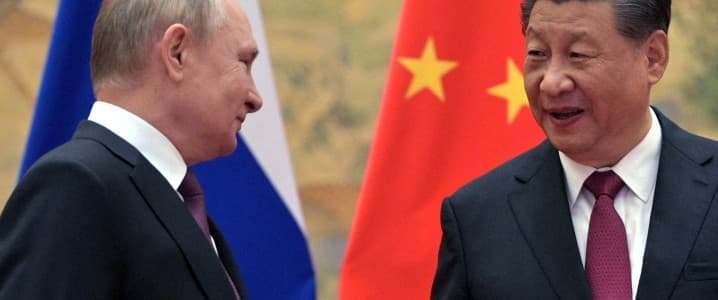
As the U.S., European Union (E.U.), and Great Britain have dramatically ratcheted up sanctions on Russia’s war in Ukraine, Moscow last week sent Deputy Prime Minister Alexander Novak, Rosneft chief executive officer Igor Sechin, and other senior officials to China to discuss deepening energy ties and wider cooperation. This deputation follows the major reduction in Russian oil that China has bought so far this year in the wake of the heightened Western sanctions on Moscow, and increased surveillance on Beijing’s role in assisting its war in Ukraine, directly or indirectly. Indeed, according to data from China’s General Administration of Customs, China’s purchases of Russian oil are down 7.7% year on year in 2025, to around 2 million barrels per day (bpd). Meanwhile, the value of these deliveries to Russia has dropped 20% over the January-October period, from US$52.84 billion in 2024 to US$42.06 billion this year. Just three weeks before Russia invaded Ukraine on 24 February 2022, Russian President Vladimir Putin held his first in-person meeting with his Chinese counterpart, Xi Jinping, for nearly two years, at the opening of the Winter Olympics ceremony in Beijing. After this meeting, they issued a joint communiqué stating that “Friendship between the two States [China and Russia] has no limits, there are no forbidden areas of cooperation.” So, where is this cornerstone relationship of the global geopolitical structure now, and where is it headed?
During last week’s meetings, Novak was clearly keen to remind China of those sentiments, saying: “Russia is committed to the closest possible partnership with China in the energy sector across all areas of cooperation.” Rosneft’s Sechin appeared to stress the camaraderie between the two as opponents of the West: “Let me remind you that, like China, Russia has been under increasing external pressure for many years… The primary goal of this pressure is to push our country out of the global market… The experience of the last 10 years has shown that these attempts are doomed to failure.” On the other side of the equation, President Xi did not personally respond to either but confined his comments in Russia to part of a broader congratulatory letter to the Russia-China Energy Business Forum being held in Beijing, which the two Russians also attended while they were in the city. The letter simply stated that China is willing to work with Russia to consolidate their energy partnership, maintain supply chains, and promote fair, balanced global energy governance. This more diplomatic response mirrors the broadly more measured approach that China has taken to the previous ‘no limits’ relationship. Indeed, this was evident within a week of the Russia-Ukraine war having spread to Ukraine’s major cities, when Xi held urgent talks with Putin and advocated peaceful negotiations between Russia and Ukraine. At the same time, China’s then-Foreign Minister Wang Yi told senior European officials that China respects countries’ sovereignty, including Ukraine’s, as analysed in full in my latest book on the new global oil market order. This swift public intervention by China to clearly state its view on respecting other countries’ sovereignty -- when this was precisely what Russia’s invasion of Ukraine had not done - shocked Putin, senior Moscow-based sources close to the Russian president told OilPrice.com at the time. He had been certain before the invasion that China would stand by Russia, whatever it did, in line with the ‘no limit’ friendship joint communiqué released on 4 February. However, according to the same sources, China believed it had not been kept fully informed by Putin of what Russia had intended to do in Ukraine in terms of both the sequence of actions and their timing.
For Beijing at that turning point in 2022, the optimal approach to increasing its power, and that of its allies – including Russia – was the steady accretion of influence through economic and political deals, as exemplified through the stealth strategy inherent in its ‘Belt and Road Initiative’ (BRI) programme. In terms of the European phase of this programme, what China wanted Russia to do was to continue to increase the dependence of European states, principally Germany, on cheap and plentiful supplies of Russian gas, and also oil, whilst additionally broadening and deepening its relationships with key political and business figures across the region. Indeed, China had been especially pleased with the progress of the second Nord Stream pipeline that would take Russian gas directly into Germany. Beijing anticipated further similar developments in the following few years would mean that Russia’s influence over Europe would be ingrained into the fabric of its economic and political systems by 2027. China anticipated that this would act as a smoothing mechanism for its own BRI-related efforts in the north and south of the continent. However, in Beijing’s view, all of this carefully constructed infrastructural, economic and political leverage has gone into reverse as Russia first moved into Ukraine and then continued its war.
Xi knew in early February 2022 that neither China nor Russia -- even working closely together -- could defeat the U.S. and its allies militarily back then, and his view has apparently not changed, judging from the lack of direct confrontation Beijing has presented to Washington since that point. Maintaining this status quo until it is ready to directly challenge the U.S. is the core plank of China’s strategy in dealing with the West on the geopolitical issue in which it is most interested – Taiwan. Unlike Russia and its ambitions for Ukraine (and all its previous eastern European satellite states before 2001), Beijing has always been careful not to overstep the carefully drawn-up boundaries between it and the U.S. This is based on the highly precise terms involved in all the pertinent agreements and understandings between Beijing and Washington relating to the latter’s ‘One China’ doctrine, as also fully detailed in my latest book. This is that: the U.S. ‘recognises’ the People’s Republic of China (based in Beijing) as the sole legal government of China, but only ‘acknowledges’ the Chinese position that Taiwan is part of China. This is why, in the same 4 February 2022 joint communiqué between China and Russia, virtually at the top of the document was the statement: “The sides call on all States to protect the UN?driven international architecture, seek genuine multipolarity, and promote peace, stability and sustainable development across the world.” They also criticised what they saw as unilateral interference by the U.S. and its allies in other countries’ affairs, arguing such actions fuel confrontation and hinder global progress. The problem for China was that having laid down its supposed endgame in its international ambitions and the methods by which it wanted to achieve it – and having contrasted those with the methods it saw the U.S. and its allies as using -- its own principal geopolitical ally, Russia, had done much worse by launching a full-scale invasion of a sovereign territory, unprovoked and unwanted by its people.
China’s caution from then has been stoked further recently by the increasing rhetoric and sanctions from U.S. President Donald Trump on China’s assistance to Russia’s ongoing war efforts in Ukraine. As recently as September, Trump specifically called on European countries to stop importing Russian oil and gas and to start imposing tariffs on China to end the war in Ukraine. He added that Beijing has a strong grip over Moscow and that it has become Russia’s largest trading partner since the Ukraine war began, providing it with a critical financial lifeline in the process. As a result, the E.U.’s 19th package of sanctions against Russia, released on 19 September, proposed further measures against Chinese companies and figures supporting Russia’s military industry. The measures also aimed at squeezing Russia’s access to technologies, including artificial intelligence and geospatial data, as well as critical resources that feed weapons production, including those received from China. The package further targeted refineries, oil traders, and petrochemical companies in China, and added more chemicals, metal components, salts, and ores to its export bans and tighter export controls on entities from Russia and China. As for Trump’s team, they will be closely monitoring China’s continued imports of oil and gas from Russia. According to the Washington and a senior security source at the E.U. exclusively spoken to by OilPrice.com last week, there may well be more sanctions on China from the U.S. and/or the E.U. aimed at further curtailing its import of Russian energy prior to the likely next meeting of Trump and Xi in April.
 oilprice.com
Dec 02, 2025
- Russia is pushing to deepen energy ties with China as Western sanctions tighten.
- Beijing has cooled its enthusiasm for the once-declared “no limits” partnership, cutting Russian oil purchases nearly 8% this year and responding cautiously to Moscow’s overtures.
- China has grown more strategic and restrained toward Russia since the Ukraine invasion, prioritizing global stability, its Belt and Road ambitions, and avoiding direct confrontation with the U.S.
As the U.S., European Union (E.U.), and Great Britain have dramatically ratcheted up sanctions on Russia’s war in Ukraine, Moscow last week sent Deputy Prime Minister Alexander Novak, Rosneft chief executive officer Igor Sechin, and other senior officials to China to discuss deepening energy ties and wider cooperation. This deputation follows the major reduction in Russian oil that China has bought so far this year in the wake of the heightened Western sanctions on Moscow, and increased surveillance on Beijing’s role in assisting its war in Ukraine, directly or indirectly. Indeed, according to data from China’s General Administration of Customs, China’s purchases of Russian oil are down 7.7% year on year in 2025, to around 2 million barrels per day (bpd). Meanwhile, the value of these deliveries to Russia has dropped 20% over the January-October period, from US$52.84 billion in 2024 to US$42.06 billion this year. Just three weeks before Russia invaded Ukraine on 24 February 2022, Russian President Vladimir Putin held his first in-person meeting with his Chinese counterpart, Xi Jinping, for nearly two years, at the opening of the Winter Olympics ceremony in Beijing. After this meeting, they issued a joint communiqué stating that “Friendship between the two States [China and Russia] has no limits, there are no forbidden areas of cooperation.” So, where is this cornerstone relationship of the global geopolitical structure now, and where is it headed?
During last week’s meetings, Novak was clearly keen to remind China of those sentiments, saying: “Russia is committed to the closest possible partnership with China in the energy sector across all areas of cooperation.” Rosneft’s Sechin appeared to stress the camaraderie between the two as opponents of the West: “Let me remind you that, like China, Russia has been under increasing external pressure for many years… The primary goal of this pressure is to push our country out of the global market… The experience of the last 10 years has shown that these attempts are doomed to failure.” On the other side of the equation, President Xi did not personally respond to either but confined his comments in Russia to part of a broader congratulatory letter to the Russia-China Energy Business Forum being held in Beijing, which the two Russians also attended while they were in the city. The letter simply stated that China is willing to work with Russia to consolidate their energy partnership, maintain supply chains, and promote fair, balanced global energy governance. This more diplomatic response mirrors the broadly more measured approach that China has taken to the previous ‘no limits’ relationship. Indeed, this was evident within a week of the Russia-Ukraine war having spread to Ukraine’s major cities, when Xi held urgent talks with Putin and advocated peaceful negotiations between Russia and Ukraine. At the same time, China’s then-Foreign Minister Wang Yi told senior European officials that China respects countries’ sovereignty, including Ukraine’s, as analysed in full in my latest book on the new global oil market order. This swift public intervention by China to clearly state its view on respecting other countries’ sovereignty -- when this was precisely what Russia’s invasion of Ukraine had not done - shocked Putin, senior Moscow-based sources close to the Russian president told OilPrice.com at the time. He had been certain before the invasion that China would stand by Russia, whatever it did, in line with the ‘no limit’ friendship joint communiqué released on 4 February. However, according to the same sources, China believed it had not been kept fully informed by Putin of what Russia had intended to do in Ukraine in terms of both the sequence of actions and their timing.
For Beijing at that turning point in 2022, the optimal approach to increasing its power, and that of its allies – including Russia – was the steady accretion of influence through economic and political deals, as exemplified through the stealth strategy inherent in its ‘Belt and Road Initiative’ (BRI) programme. In terms of the European phase of this programme, what China wanted Russia to do was to continue to increase the dependence of European states, principally Germany, on cheap and plentiful supplies of Russian gas, and also oil, whilst additionally broadening and deepening its relationships with key political and business figures across the region. Indeed, China had been especially pleased with the progress of the second Nord Stream pipeline that would take Russian gas directly into Germany. Beijing anticipated further similar developments in the following few years would mean that Russia’s influence over Europe would be ingrained into the fabric of its economic and political systems by 2027. China anticipated that this would act as a smoothing mechanism for its own BRI-related efforts in the north and south of the continent. However, in Beijing’s view, all of this carefully constructed infrastructural, economic and political leverage has gone into reverse as Russia first moved into Ukraine and then continued its war.
Xi knew in early February 2022 that neither China nor Russia -- even working closely together -- could defeat the U.S. and its allies militarily back then, and his view has apparently not changed, judging from the lack of direct confrontation Beijing has presented to Washington since that point. Maintaining this status quo until it is ready to directly challenge the U.S. is the core plank of China’s strategy in dealing with the West on the geopolitical issue in which it is most interested – Taiwan. Unlike Russia and its ambitions for Ukraine (and all its previous eastern European satellite states before 2001), Beijing has always been careful not to overstep the carefully drawn-up boundaries between it and the U.S. This is based on the highly precise terms involved in all the pertinent agreements and understandings between Beijing and Washington relating to the latter’s ‘One China’ doctrine, as also fully detailed in my latest book. This is that: the U.S. ‘recognises’ the People’s Republic of China (based in Beijing) as the sole legal government of China, but only ‘acknowledges’ the Chinese position that Taiwan is part of China. This is why, in the same 4 February 2022 joint communiqué between China and Russia, virtually at the top of the document was the statement: “The sides call on all States to protect the UN?driven international architecture, seek genuine multipolarity, and promote peace, stability and sustainable development across the world.” They also criticised what they saw as unilateral interference by the U.S. and its allies in other countries’ affairs, arguing such actions fuel confrontation and hinder global progress. The problem for China was that having laid down its supposed endgame in its international ambitions and the methods by which it wanted to achieve it – and having contrasted those with the methods it saw the U.S. and its allies as using -- its own principal geopolitical ally, Russia, had done much worse by launching a full-scale invasion of a sovereign territory, unprovoked and unwanted by its people.
China’s caution from then has been stoked further recently by the increasing rhetoric and sanctions from U.S. President Donald Trump on China’s assistance to Russia’s ongoing war efforts in Ukraine. As recently as September, Trump specifically called on European countries to stop importing Russian oil and gas and to start imposing tariffs on China to end the war in Ukraine. He added that Beijing has a strong grip over Moscow and that it has become Russia’s largest trading partner since the Ukraine war began, providing it with a critical financial lifeline in the process. As a result, the E.U.’s 19th package of sanctions against Russia, released on 19 September, proposed further measures against Chinese companies and figures supporting Russia’s military industry. The measures also aimed at squeezing Russia’s access to technologies, including artificial intelligence and geospatial data, as well as critical resources that feed weapons production, including those received from China. The package further targeted refineries, oil traders, and petrochemical companies in China, and added more chemicals, metal components, salts, and ores to its export bans and tighter export controls on entities from Russia and China. As for Trump’s team, they will be closely monitoring China’s continued imports of oil and gas from Russia. According to the Washington and a senior security source at the E.U. exclusively spoken to by OilPrice.com last week, there may well be more sanctions on China from the U.S. and/or the E.U. aimed at further curtailing its import of Russian energy prior to the likely next meeting of Trump and Xi in April.
Moscow Pushes For Deeper Ties In Summit With China | OilPrice.com
China has grown more strategic and restrained toward Russia since the Ukraine invasion, prioritizing global stability, its Belt and Road ambitions, and avoiding direct confrontation with the U.S.
oilprice.com


