Steeles Royal

What Is The Significance Of The Fall Of Pokrovsk?

niniveh

Well-known member
Jun 8, 2009
1,652
832
113
Sooooo.... how has the "fall of Pokrovsk" worked out? It's been a month since it's fallen. 🤡

Battlefield Picture Worsening for Ukraine as Trump Pushes Peace Plan
Russian forces have advanced on several fronts recently. President Vladimir V. Putin signaled after talks with U.S. officials that he was not budging from demands.


Soldiers in camouflage stand near artillery.

The 148th Artillery Brigade of the Ukrainian Army in October in the Zaporizhzhia region of eastern Ukraine.Credit...Tyler Hicks/The New York Times
By Cassandra VinogradOleksandr Chubko and Maria Varenikova
Reporting from Kyiv, Ukraine
Dec. 6, 2025Updated 11:01 a.m. ET

It was a clear attempt to project Russian power.
Hours before meeting U.S. officials in Moscow this past week about their plan to end the war, President Vladimir V. Putin claimed that Russia’s forces had seized the strategic Ukrainian city of Pokrovsk after a monthslong fight.
The reality was murkier. Slivers of the city were still contested, according to battlefield maps and the Ukrainian military. But Mr. Putin’s claim, even if premature, reflected a trend shaping his unbending approach to negotiations: Russian forces are on the march.
“The Russians do have the upper hand,” said Emil Kastehelmi, a military analyst with the Finland-based Black Bird Group. Ukraine is not yet at the point where it must capitulate, he said, but it “is looking weak enough that the Russians think that they can impose demands.”
Mr. Putin has ordered the Russian military to prepare for winter combat, signaling after the talks with U.S. officials that he is not budging from his hard-line demands. Mr. Trump’s special envoy, Steve Witkoff, has since held a series of discussions in Miami with Ukraine’s delegation — with another expected to take place on Saturday — that both sides called “constructive.”


As these statements were being released, Russia unleashed more than 650 drones and 51 missiles on towns and cities across Ukraine in an assault that began overnight on Friday and stretched through Saturday morning, Ukrainian officials said.
Image
Soldiers in camouflage stand in the dark, lit by a light on one of their helmets.

Ukrainian soldiers last month near Pokrovsk, in Ukraine’s Donetsk region.Credit...Anatolii Stepanov/Reuters
In recent weeks, Russian forces have advanced on several fronts. They are on the brink of capturing Pokrovsk, a onetime logistics hub in the eastern region of Donetsk, and have nearly encircled its neighbor, Myrnohrad. They are moving quicker in the southern region of Zaporizhzhia. They are pressing closer to the northeastern city of Kupiansk, and they are making gains around the eastern city of Siversk, according to battlefield maps, analysts and soldiers.


Since Nov. 1
Gained by Russia
Gained by Ukraine
RUSSIA
Kharkiv
UKRAINE
Kupiansk
KHARKIV
LUHANSK
HELD BY
RUSSIA
Siversk
Luhansk
Dnipro
Pokrovsk
Dnipropetrovsk
Donetsk
Zaporizhzhia
DONETSK
Dnipro
River
Mariupol
ZAPORIZHZHIA
Melitopol
Ukraine
Sea of Azov
40 miles
Note: As of Dec. 3, 2025
Source: The Institute for the Study of War with American Enterprise Institute’s Critical Threats Project
By Josh Holder
The advances have been slow and costly, in both lives and equipment. Ukrainian officials and analysts say Mr. Putin could still be years away from achieving his territorial goals. Chief among them is capturing the rest of the Donetsk region, which would give Russia all of the broader eastern Ukrainian area known as the Donbas.


But Russia’s pace is quickening, and incremental moves have started to add up. Moscow’s forces captured 505 square kilometers, or nearly 200 square miles, of territory in November, up from 267 square kilometers, or about 100 square miles, in October, according to the battlefield map maintained by DeepState, a Ukrainian group with ties to the military.
Want to stay updated on what’s happening in Russia and Ukraine? Sign up for Your Places: Global Update, and we’ll send our latest coverage to your inbox.
“The future looks really, really grim for Ukraine,” said Mr. Kastehelmi, the analyst. “I don’t see a clear path out.”
On Monday, Ukraine’s president, Volodymyr Zelensky, is expected to meet in London with Prime Minister Keir Starmer of Britain, President Emanuel Macron of France and Chancellor Friedrich Merz of Germany, “to take stock of the situation and the ongoing negotiations within the framework of the U.S. mediation,” Mr. Macron wrote on social media.
“We must continue to exert pressure on Russia to compel it to choose peace,” he wrote.
For now, Ukraine appears to have enough resources to keep the front line from collapsing. But it is bending. Mr. Putin has suggested that Ukraine, facing manpower shortages and uncertainty about Western aid, should concede to his demands before the war gets even worse.
The Russian leader, in an interview with an Indian news outlet that was published on Thursday, said Russia would take additional territory in Donetsk by whatever means necessary.


The Kremlin’s summer offensive, which was aimed at capturing all of Donetsk, produced limited gains. But starting in the fall, the tide there started to turn in Russia’s favor. After months of bombarding Pokrovsk with artillery, drones and glide bombs, Russian forces punched through a string of villages and settlements to fight their way into the city.
“Things started to fall apart a bit on our side” starting in September, said Ihor, a Ukrainian drone pilot in the area who gave only his first name, according to military protocol. “The line just began collapsing from exhaustion.”
Russian forces are sending fixed-wing Molniya drones and waves of mini kamikaze drones that carry explosives, he said, adding that Ukraine had nothing comparable in mass production.
The current push for a peace plan is “all bluff,” he said, adding that as long as the Russians have “the ability to press us, they will keep pressing.”
Advertisement
SKIP ADVERTISEMENT


At the same time, Russian forces have taken aim at other critical cities in Donetsk, including Kostiantynivka and Lyman.
Image
An empty, two-lane street lined with apartment buildings and billboards. Black smoke rises in the background against a blue sky with fluffy white clouds.

Smoke rising from the besieged city of Kostiantynivka in October.Credit...Tyler Hicks/The New York Times
Oleh Voitsekhovskyi, a Ukrainian captain whose unit is near Lyman, said Russian forces were attacking “all the time” and “along all directions.”
Drone strikes, shelling — it never stops, he said. “In the last two months,” he added, “you can feel an increase in the intensity of hostilities.”
Russian forces move in small groups, he said, as Ukrainian drones keep watch overhead. Heavy fog has made it harder for the drones to fend off the Russians.
Russia’s push toward Kostiantynivka, though, has so far failed to yield much in the way of territorial gains, the DeepState map shows. The same can be said for Lyman.


That has put more emphasis and urgency on Pokrovsk.
A thick fog descends there every day, accompanying “the smell of burned coal and the smell of gunpowder that has a hint of manganese, like at a firing range,” said Maksym Bakulin, who is with the 14th Operational Brigade of the National Guard.
While the city was “alive” a year ago, he added, Pokrovsk’s once bustling streets now have “civilian bodies and military bodies mixed together, with no possibility to retrieve them.”
Russian forces see Pokrovsk as a steppingstone toward Sloviansk and Kramatorsk, two heavily fortified cities in Donetsk that Ukraine still controls.
Some analysts have questioned Ukraine’s decision to keep fighting in Pokrovsk and incur heavy losses there. Analysts and some Ukrainian soldiers have said Kyiv may be trying to hold on to avoid feeding Russia’s narrative of inevitable victory as peace talks heat up. Staying in Pokrovsk could also increase Russian forces’ losses.
Image
An orange glow is cast over an apartment building at night as a firefighter aims a water hose at a third-floor window to douse bright yellow flames.

The scene after a Russian strike on an administrative building in October in Sloviansk.Credit...Tyler Hicks/The New York Times


As Ukraine concentrated so many resources on that battle, analysts say, Russian forces spotted an opportunity elsewhere on the 75-mile-long front line, in the southeastern Zaporizhzhia region.
Russian forces made a relatively quick march there in recent weeks, seizing about 75 square miles around the city of Huliaipole in November, nearly 40 percent of Moscow’s total territorial gains last month, according to DeepState.
Ukraine has sent some reserves to the area, which has helped slow the advance, “but still the pace there is relatively alarming,” said Mr. Kastehelmi, the analyst.
The onset of winter could reduce the pace of Russia’s advances along the broader front, and also Ukrainian movements. The preponderance of drones is slowing things down even further, forcing a shift away from infantry-heavy attacks. Because of the drones, the front line is less of a line and more of a patch of land, what soldiers call a “kill zone,” up to 15 miles wide in places.
But Russia has a seemingly endless spigot of soldiers and a willingness to absorb heavy losses in a style of warfare that has been likened to a meat grinder.

“Russia has committed itself to a war of attrition, and they are currently trying to militarily break Ukraine, slowly,” Mr. Kastehelmi said.
As the 18-month battle for Pokrovsk seemingly enters its final stages, fears have risen for the neighboring city of Myrnohrad.
Russia is storming Ukrainian positions there daily, said Oleh, a sergeant platoon commander in the area who also would give only his first name per military protocol. Drones have turned the roads in and out into death traps.
“Neither by day nor by night do they give us peace,” Oleh said.
He marveled at Russia’s resources, including night vision, resupply aircraft and soldiers.
“If we have three people, they have 30,” he said. “How much manpower they have is just unreal.”
“But,” he added, “they also did not expect that we would fight for so long.”
Maria Varenikova covers Ukraine and its war with Russia.
 

SchlongConery

License to Shill
Jan 28, 2013
14,856
9,395
113
So @niniveh ... still not "taken" as advertised many times over the past few months.

Rag-tag bunch of kohols managing to hold off the mighty Russian propaganda machine army. 😜
 

niniveh

Well-known member
Jun 8, 2009
1,652
832
113
So @niniveh ... still not "taken" as advertised many times over the past few months.

Rag-tag bunch of kohols managing to hold off the mighty Russian propaganda machine army. 😜
Let's agree to disagree. You view this conflict as a war of agression between Russia and Ukraine. I tend to look at it as a war between NATO and Russia, provoked by NATO and going back decades. It didn't start in February of 2022, or in the putch of 2014 or or or ...Let me take you back to a grove of fig trees not far from the city of Adana in Turkey. What was happening there in the 1950's? ( Hint the Turkish word for fig is "incir".) What is the story behind a high flying spy plane (U2, 70k ft) which the CIA denied was missing until the Soviets produced the pilot Gary powers? Why did the US simply ignore Soviet red lines about NATO bases near Russian borders? Why did Kennedy blockade Cuba in 1982, bringing us dangerously close to a nuclear war? What was the secret deal about nukes at Incirlik that resolved the crisis so quickly? What did Jim Baker promise Gorbachev? It's seemingly endless but let's talk history if you wish. Ukraine's misfortune is that it is caught between the West and a nuclear superpower neighbour with clear red lines. To be sure, as a sovereign nation Ukraine can join any organization it wants. Except that NATO is not a social club. And the worst of it is that Ukraine, having thrown its lot entirely with NATO is about to find out that NATO without the US, amounts to nothing. And Trump is about to pull the plug.


The European Union’s hypocrisies on Ukraine
France, Germany and Belgium see the speck in Trump’s eye but don’t notice the log in their own.
December 7, 2025 at 7:00 a.m. ESTToday at 7:00 a.m. EST


E.U. President Ursula von der Leyen, Prime Minister Bart De Wever and German Chancellor Friedrich Merz confer in Brussels on Friday. (Nicolas Maeterlinck/Belga/AFP via Getty Images)

With friends like these, who needs enemies? “There is a chance that the U.S. will betray Ukraine on territory without clarity on security guarantees,” French President Emmanuel Macron warned Ukraine’s President Volodymyr Zelensky and German Chancellor Friedrich Merz during a conference call, according to Der Spiegel. Macron warned of “a big danger” as the Trump administration continues its mission to bring the war to an end and negotiate concessions between Russia and Ukraine.


European leaders should make sure they are without sin before casting such heavy stones. How does Macron explain, for example, France’s ranking as the third largest buyer of Russian energy in Europe? That’s not pre-2022 or pre-2014, when Russian President Vladimir Putin launched his illegal invasions of Ukraine. That’s as of August.

This is a Europe-wide problem. Leaders offer up their “unwavering commitment and solidarity with Ukraine.” In theory. In practice, the continent often cannot agree, let alone act, to make the choices and sacrifices required to help its neighbor.

Both Merz and European Commission President Ursula von der Leyen pleaded Friday with Belgian Prime Minister Bart De Wever not to block the E.U.’s plans to use frozen Russian assets to help fund Ukraine’s war effort next year. De Wever is worried the bloc is “downplaying” his concerns over how seizing approximately €140 billion worth of assets would affect peace talks.

Speaking to the Belgian newspaper La Libre, De Wever said: “Moscow has made it clear to us that if his assets are seized, Belgium and I will feel the consequences for eternity.” He added: “Who really believes that Russia will lose to Ukraine? It is a fable, a total illusion. It is not even desirable that it loses and that instability takes hold in the country that has nuclear weapons.” Even compared to every eyebrow-raising thing President Donald Trump has ever said about Putin, that’s still a remarkably cynical view.
If the war expands, it’s Europe that will be in Moscow’s crosshairs. This makes its leaders’ attempts to moralize about America’s actions even stranger. The E.U. is only just now gearing up to agree to a bloc-wide ban on imported Russian gas – starting in 2027. Meanwhile, European countries had been turning to India for their energy supply, glossing over the inconvenient truth that Russian crude oil flowed through many of its refineries. In the first three quarters of 2024, imports from these refineries grew by 20 percent.
The U.S. president has a bad habit of treating allies less kindly than adversaries, but he also understands the brutal reality of how power is exercised. Talk is cheap, and Europeans are wealthy. They can do better.
 
  • Haha
Reactions: Valcazar

niniveh

Well-known member
Jun 8, 2009
1,652
832
113
Excerpt From The 2025 US National Security Strategy: Europe & Ukraine


C. Promoting European GreatnessAmerican officials have become used to thinking about European problems interms of insufficient military spending and economic stagnation. There is truth tothis, but Europe’s real problems are even deeper.Continental Europe has been losing share of global GDP—down from 25 percentin 1990 to 14 percent today—partly owing to national and transnational regulationsthat undermine creativity and industriousness.But this economic decline is eclipsed by the real and more stark prospect ofcivilizational erasure. The larger issues facing Europe include activities of theEuropean Union and other transnational bodies that undermine political liberty andsovereignty, migration policies that are transforming the continent and creatingstrife, censorship of free speech and suppression of political opposition, crateringbirthrates, and loss of national identities and self-confidence.Should present trends continue, the continent will be unrecognizable in 20 years orless. As such, it is far from obvious whether certain European countries will haveeconomies and militaries strong enough to remain reliable allies. Many of thesenations are currently doubling down on their present path. We want Europe toremain European, to regain its civilizational self-confidence, and to abandon itsfailed focus on regulatory suffocation.This lack of self-confidence is most evident in Europe’s relationship with Russia.European allies enjoy a significant hard power advantage over Russia by almostevery measure, save nuclear weapons. As a result of Russia’s war in Ukraine,European relations with Russia are now deeply attenuated, and many Europeansregard Russia as an existential threat. Managing European relations with Russiawill require significant U.S. diplomatic engagement, both to reestablish conditionsof strategic stability across the Eurasian landmass, and to mitigate the risk ofconflict between Russia and European states.It is a core interest of the United States to negotiate an expeditious cessation ofhostilities in Ukraine, in order to stabilize European economies, preventunintended escalation or expansion of the war, and reestablish strategic stabilitywith Russia, as well as to enable the post-hostilities reconstruction of Ukraine toenable its survival as a viable state.

p. 30
26The Ukraine War has had the perverse effect of increasing Europe’s, especiallyGermany’s, external dependencies. Today, German chemical companies arebuilding some of the world’s largest processing plants in China, using Russian gasthat they cannot obtain at home. The Trump Administration finds itself at odds withEuropean officials who hold unrealistic expectations for the war perched inunstable minority governments, many of which trample on basic principles ofdemocracy to suppress opposition. A large European majority wants peace, yet thatdesire is not translated into policy, in large measure because of those governments’subversion of democratic processes. This is strategically important to theUnited States precisely because European states cannot reform themselves if theyare trapped in political crisis.Yet Europe remains strategically and culturally vital to the United States.Transatlantic trade remains one of the pillars of the global economy and ofAmerican prosperity. European sectors from manufacturing to technology toenergy remain among the world’s most robust. Europe is home to cutting-edgescientific research and world-leading cultural institutions. Not only can we notafford to write Europe off—doing so would be self-defeating for what this strategyaims to achieve.American diplomacy should continue to stand up for genuine democracy, freedomof expression, and unapologetic celebrations of European nations’ individualcharacter and history. America encourages its political allies in Europe to promotethis revival of spirit, and the growing influence of patriotic European parties indeedgives cause for great optimism.Our goal should be to help Europe correct its current trajectory. We will need astrong Europe to help us successfully compete, and to work in concert with us toprevent any adversary from dominating Europe.America is, understandably, sentimentally attached to the European continent—and, of course, to Britain and Ireland. The character of these countries is alsostrategically important because we count upon creative, capable, confident,democratic allies to establish conditions of stability and security. We want to workwith aligned countries that want to restore their former greatness.

p. 31
27Over the long term, it is more than plausible that within a few decades at the latest,certain NATO members will become majority non-European. As such, it is an openquestion whether they will view their place in the world, or their alliance with theUnited States, in the same way as those who signed the NATO charter.Our broad policy for Europe should prioritize:• Reestablishing conditions of stability within Europe and strategic stabilitywith Russia;• Enabling Europe to stand on its own feet and operate as a group of alignedsovereign nations, including by taking primary responsibility for its owndefense, without being dominated by any adversarial power;• Cultivating resistance to Europe’s current trajectory within Europeannations;• Opening European markets to U.S. goods and services and ensuring fairtreatment of U.S. workers and businesses;• Building up the healthy nations of Central, Eastern, and Southern Europethrough commercial ties, weapons sales, political collaboration, and culturaland educational exchanges;• Ending the perception, and preventing the reality, of NATO as a perpetuallyexpanding alliance; and• Encouraging Europe to take action to combat mercantilist overcapacity,technological theft, cyber espionage, and other hostile economic practices
 

SchlongConery

License to Shill
Jan 28, 2013
14,856
9,395
113
Fall of Pokrovsk as in rotting Russian corpses falling into the anti-tank trenches as the conveyor belt of Orc are sent to their deaths by their commanders to give Putin good news that the "liberation" of Pokrovsk is "going according to plan" ?

According to Igor Girkin (Strelkov): "Ukraine is waging war intelligently and coolly, transforming the Russian offensive into a bloody and futile annihilation of forces."


  • Like
Reactions: mandrill

mandrill

monkey
Aug 23, 2001
86,798
132,408
113
Fall of Pokrovsk as in rotting Russian corpses falling into the anti-tank trenches as the conveyor belt of Orc are sent to their deaths by their commanders to give Putin good news that the "liberation" of Pokrovsk is "going according to plan" ?

According to Igor Girkin (Strelkov): "Ukraine is waging war intelligently and coolly, transforming the Russian offensive into a bloody and futile annihilation of forces."


Is Girkin still in prison for being smarter than Putin or his generals?
 
  • Haha
Reactions: SchlongConery

SchlongConery

License to Shill
Jan 28, 2013
14,856
9,395
113
@niniveh

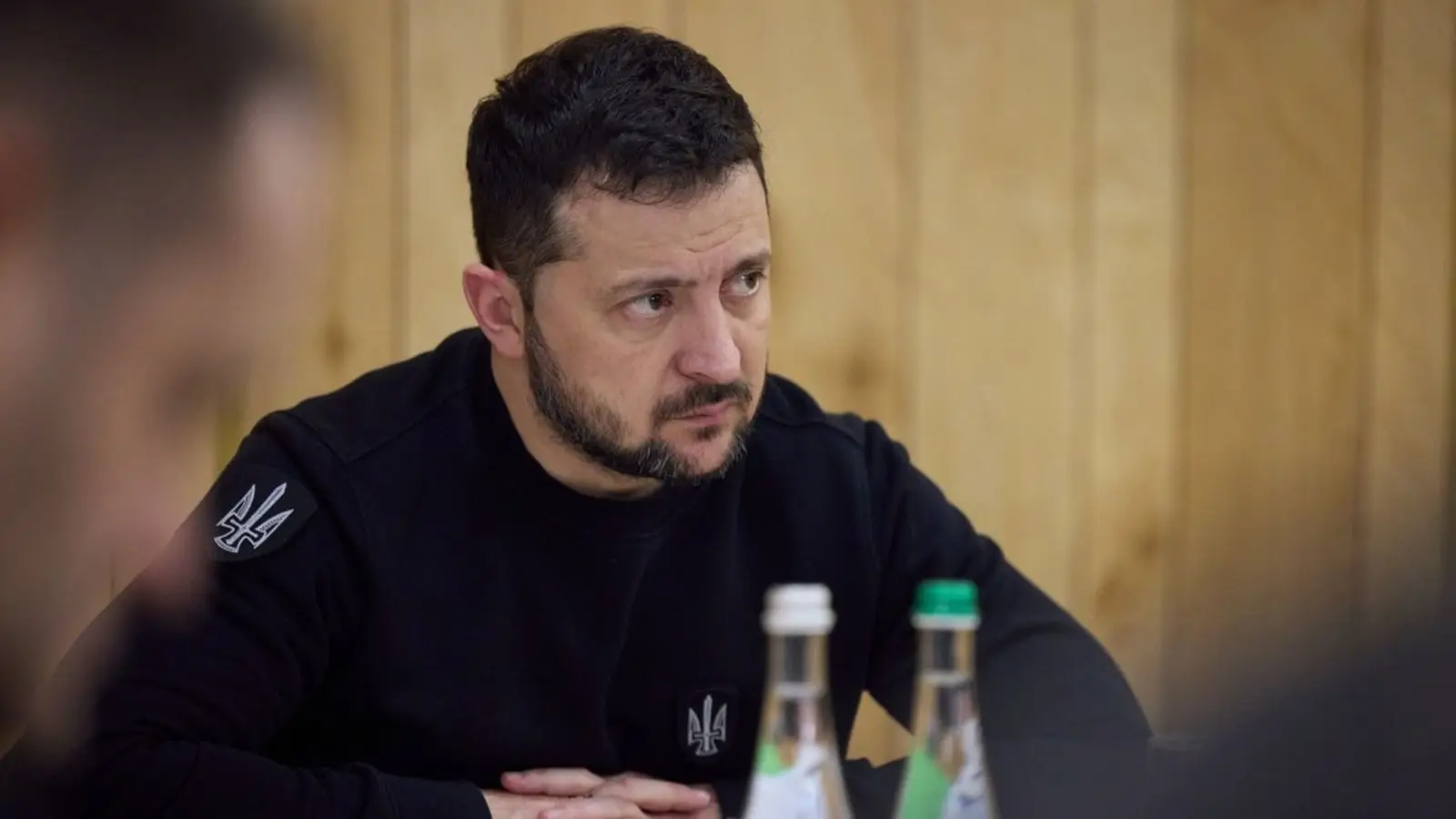
So Zelenskyy dragged his BIG HUGE BALLS up to the Kupiansk frontlines to post some selfies. I wonder if Putin's soibois are going to inveite themselves to tea to share the video with the Russian strongman with boba pearls for balls sitting in his bunker somewhere? :LOL:


After Putin Claims Ukrainian Troops Were Surrounded, Zelensky Shows Up and Posts Selfies

1765636867291.png

Ukrainian President Volodymyr Zelensky came up with a simple and effective way to combat Russian President Vladimir Putin’s claims that Ukrainian troops in Kupiansk were surrounded — show up in person and post selfies.

Recently, Putin had doubled down on claiming Kupiansk was under Russian control and even invited international media to visit and verify his claims.


On Friday, Zelensky posted a short video from Kupiansk standing in front of its distinctive city sign.

The Kremlin has been claiming for weeks that Russian troops had recaptured Kupiansk, a city in the Kharkiv Oblast in northeastern Ukraine near the border with Russia — claims that Ukraine has repeatedly disputed.

Described by The Kyiv Post as “one of the hottest parts of the frontline,” Kupiansk was occupied by Russia in the early months of the full-scale invasion until it was liberated during the September 2022 Kharkiv counteroffensive. Russian troops have continued to attack the city, shelling hospitals, schools, apartments, and other infrastructure and civilian buildings.


mandrill

monkey
Aug 23, 2001
86,798
132,408
113
OF course he is. Wondering why he hasn't been moved to a cell with a window and balcony yet?
I'd even phone up Putin and offer to personally push girkin off the ledge myself. Fucker killed untold vics back in the Donbas War in the 20-teens and is too fucking smart.
 
  • Like
Reactions: SchlongConery

niniveh

Well-known member
Jun 8, 2009
1,652
832
113
I'd even phone up Putin and offer to personally push girkin off the ledge myself. Fucker killed untold vics back in the Donbas War in the 20-teens and is too fucking smart.


Kyiv after dark
Ukrainians spend the week digging in for another stressful winter
Mark MacKinnonSenior International Correspondent
Photography by Olga Ivashchenko
Includes correction
Kyiv
The Globe and Mail
Published YesterdayUpdated 4 hours ago


Life in Kyiv in the fourth winter of war is about endurance.

The nights are broken by air-raid alarms, explosions, and the scramble to get to a shelter.

The morning after brings rolling power blackouts, with many neighbourhoods receiving just eight or nine hours of electricity per day. Cooking and other household chores need to be condensed into the often-inconvenient periods when the lights are on.

Then there’s the whirlwind of events. The Russian army continues to grind forward in the southeastern Donbas region of the country. U.S. President Donald Trump is leading hectic, but seemingly doomed, negotiations aimed at ending the war. Closer to home, there’s a US$100-million corruption scandal that reaches right into the office of President Volodymyr Zelensky.

Then the power cuts out, and the TV news goes off. The laundry will have to wait. Time to try and sleep. Then the air-raid siren screams again.

Here’s a snapshot of what it was like to live in Kyiv during the first full week of cold and dark December.

Other than cars, there is little to light the way in Kyiv when the rolling blackouts come. Utility workers depend on this time to repair a power grid that Russian air strikes have decimated over the years.


ZigZag bar gets through Kyiv’s blackouts with a generator and candles. In Ukraine’s wartime winters, imported gas is increasingly critical, and the government is pressing its western allies to send more of it.
Saturday, Dec. 6
It was 29 minutes after midnight when the first air-raid siren of the day sounded, signalling the start of a long and sleepless morning for Kyiv. First came the buzz of attack drones overhead. Then a series of deep booms, the sounds of drones being shot down by anti-aircraft fire.

Like many Kyiv residents, Valeriya Sergievska remained in her sixth-floor apartment for the first few hours of the attack. There are simply too many alarms, especially at night, for Ukrainians to run to a shelter every time. But at 6:30 a.m., her mobile phone buzzed with a warning that Russian forces were preparing to launch cruise and ballistic missiles in the direction of the capital.

She woke her six-year-old daughter Sofia; the pair gathered some chocolates and toys, and then ran to the safety of the nearest subway station. They stayed there for the next 90 minutes, until the all-clear was given.

Valeriya said her daughter understands that their country is under attack. Sofia’s father, Volodymyr, was a soldier who was killed in action fighting in Donbas last year. “I can’t make up stories and tell her there’s no war,” Valeriya explained. “She knows her father is with the angels now.”


Open this photo in gallery:


Valeriya Sergievska, daughter Sofia and their dog sheltered at Taras Shevchenko metro station until Saturday's air-raid siren passed.
Sunday
After a quieter night with only a single alarm, the capital awoke to a flurry of news on the diplomatic front.

While most Ukrainians were asleep, Keith Kellogg – Mr. Trump’s envoy to Kyiv – said peace talks between Russia and Ukraine were now down “to the last 10 metres,” which Mr. Kellogg acknowledged were always the hardest.

Even with that strong caveat, Mr. Kellogg’s words seemed at odds with the messages coming from Moscow and Kyiv. The Kremlin has said throughout that it views only the original 28-point peace plan – which called for Ukraine to surrender the entire Donbas region, including areas still under Ukrainian control – as a genuine starting point for negotiations. Kyiv, meanwhile, has worked with the U.S. to draft a new 20-point understanding that the Kremlin has signalled it will reject.

On Sunday, Donald Trump Jr., the president’s eldest son, dropped a diplomatic bomb, suggesting that his father could soon walk away entirely from Ukraine.

Hours later, President Trump upped the pressure further and claimed that it was Ukraine and Mr. Zelensky who were the biggest obstacles to peace.

“Apparently for Trump, the process succeeds when there is any kind of deal,” said Inna Sovsun, an MP from the opposition Holos party. “However, the conditions are extremely important to us – and extremely unimportant to the Americans who are pushing for this deal.”


Open this photo in gallery:


Ukrainian President Volodymyr Zelensky came to London on Dec. 8 to meet British Prime Minister Keir Starmer.Kin Cheung/The Associated Press
Monday
The work week began with President Zelensky on a plane to London, where he would meet with the British, French and German leaders in attempt to rally support.

In Kyiv, journalists crushed into Podil District Court for a highly anticipated court appearance by Ihor Kolomoisky, the country’s most famous prisoner.

Until he was arrested and jailed in 2023 on charges of money laundering and fraud, Mr. Kolomoisky was Ukraine’s most powerful oligarch – the owner, among other things, of the 1+1 television network that made Mr. Zelensky a star before he entered politics. There was a rumour that Mr. Kolomoisky would use his Monday court appearance to make a statement about the corruption scandal rocking Ukrainian politics.

The power was off in Podil, leaving journalists standing in a darkened hallway as they waited for the courtroom to open. Finally, a generator was switched on, and lawyers, police and media filed inside.

The only thing missing was Mr. Kolomoisky – Judge Liudmyla Kazmyrenko told her disbelieving courtroom that the defendant’s transportation had broken down.

There would be no dramatic statement from Mr. Zelensky’s ally-turned-enemy, at least not that day. (Mr. Kolomoisky alleged in a later appearance that someone had tried to kill Timur Mindich, the central figure in the scandal that has already forced the resignations of two cabinet ministers as well as Mr. Zelensky’s former chief of staff.)


Open this photo in gallery:


Judge Liudmyla Kazmyrenko postponed Dec. 8's preliminary hearing for Ihor Kolomoisky.
One of the few places that twinkled despite the power cuts Monday night was the Expocentre of Ukraine, a sprawling series of pavilions originally constructed to celebrate the economic achievements of the Soviet Union.

These days it hosts Winter Land, a Christmas market complete with an outdoor skating rink, food and hot chocolate stalls, plus children’s rides – all powered by generators. The temperature was hovering near freezing, and walking around Kyiv at night requires a flashlight, but Winter Land was bustling.

“It’s hard to just sit in the dark and the silence,” explained Mikita Protsenko, the 30-year-old manager of a stall selling toys and Christmas decorations. “People come here with their friends to be somewhere where there is electricity, where there is light.”


While Mikita Protsenko runs a stall at Winter Land, Marina Sheremet and her son Yaroslav check out the festivities. Generators keep the Christmas event going even in Kyiv’s blackout hours.
In years past, Ukrainian holiday celebrations like Winter Land would not centre on Dec. 25, which is too early for Christmas in the Orthodox calendar. But then the war soured attitudes to Russia and its churches, so Ukraine officially changed the date.
Tuesday
As Mr. Zelensky was arriving in Rome to meet with Pope Leo XIV, and his team was preparing to send a new draft of the peace plan to Washington, the mayor of Fastiv, Mykhailo Netyazhuk, was staring at a map of his city.

Fastiv, a satellite city of 50,000 people on the outskirts of Kyiv – and a key railway hub between central and western Ukraine – had suddenly become one of Russia’s main targets over the previous three days.

The city’s railway station had taken several direct hits, one of which demolished the passenger terminal, while another missile struck the main administrative building. But the station was still functioning, even as the smell of burnt metal hung in the air on Tuesday.

Mr. Netyazhuk said he believed his city was being targeted for symbolic, as well as strategic, reasons. It was at Fastiv railway station in 1918 that a unification agreement between two parts of modern-day Ukraine was signed. The green rail car where the pact was inked is now a museum, situated on the platform at Fastiv station, halfway between the two buildings that were hit.

“If Russia destroys this symbolic place, it would be a blow to our heart,” Mr. Netyazhuk said. “But our museum hasn’t been damaged, and that’s another symbol – that we will survive, and that our state, our country, will have good, peaceful, and independent European future.”

Russian strikes destroyed this train station in Fastiv, southwest of Kyiv proper.
Wednesday
As peace talks swirled – and Mr. Trump pushed Ukraine to accept that the Donbas region was lost and should be ceded to Russia – Mariya Shulika sobbed at the prospect of never seeing her daughter and youngest grandson again.

The 72-year-old fled the port city of Mariupol in May, 2022, after surviving three months of a hellish siege. But while Ms. Shulika and her eldest grandson were able to make the harrowing journey across the front line to Ukrainian-held territory, her daughter and other grandson were trapped behind as Russia took control of Mariupol.

When Ms. Shulika communicates with her daughter these days, it’s a few words at a time typed into messaging apps. The replies she gets are even shorter, sometimes just: “I’m alive.” Anything more, mother and daughter both know, could lead to trouble with the Russian occupation authorities.

Open this photo in gallery:


Mariya Shulika lives in a camp for displaced people far from her Russian-occupied hometown, Mariupol.
Ms. Shulika now lives in a modular home constructed for internally displaced Ukrainians in the Kyiv region city of Borodyanka. Rage and tears swell as she talks about the negotiations Mr. Trump is brokering. Even the European-backed plan, crafted with Kyiv’s participation, effectively concedes that cities like Mariupol will be under Russian control for the foreseeable future, with the conflict frozen on its current front lines.

“When I hear such statements from public figures, it’s like someone is taking the last hope from my body,” she said on a day Russian troops further tightened their grip on Pokrovsk, a strategically vital Donbas city. Recognizing Russian control of the region might mean Ms. Shulika’s family is forever split.

“I don’t know if Russia will ever let Ukrainians leave those occupied territories,” she said, as more tears slid down her cheeks.


Borodyanka, where Ms. Shulika and other displaced people now live, was a very different city when the Russians occupied it early in the war. This coming April will be the fourth anniversary of its liberation.
Thursday
In a war of attrition, numbers are everything.

Ukrainian forces are being pushed backward along much of the 1,250-kilometre line of contact, in large part because they are heavily outnumbered by the invading Russians. In some parts of the front line, such as near Pokrovsk, there are an estimated eight to 10 Russian soldiers for every Ukrainian.

Ukraine is in the midst of a desperate recruiting drive. But the hardest thing to find is new soldiers willing to go stand in a trench.

Thursday was nonetheless a good day for Sergeant Oleksandr Vahanov, who recruits drone operators for the 112th Territorial Defence Brigade. By the end of the day – spent half at his unit’s Kyiv headquarters, half working remotely from coffee shops as he screened new candidates – Sgt. Vahanov had three promising new recruits, though two of them were serving soldiers seeking transfers from other units.

“Drone operators have become the new infantry,” Sgt. Vahanov said, referring to how unmanned aerial vehicles are playing an ever-growing role in the war. “At the frontline, infantry are now just hiding from attacks, so drone operators have become more critical, because they’re the ones delivering strikes on Russian artillery and Russian personnel.”

Sgt. Vahanov acknowledged that it was much easier to recruit drone operators – who usually carry out their missions from behind the frontline – than the regular infantry that the country so badly lacks. “Nobody wants to join infantry units.”

Open this photo in gallery:


Sergeant Oleksandr Vahanov recruits people to pilot drones for Ukraine. Operators are 'the new infantry' in terms of their importance to the war, he says.
Friday
A relatively quiet week, at least in terms of air attacks, was broken by mobile phone alerts just before 11 a.m. warning that a Tu-95 bomber had taken off from Russia’s Olenya airbase. The warplane looked to be preparing to launch cruise missiles.

It proved to be a false alarm, with the Tu-95 only simulating – or perhaps foreshadowing – an attack. Such feints are part of the psychological war Russia has been waging on Ukraine since the start of the invasion in February 2022, hoping to break the country’s will to keep fighting.

Open this photo in gallery:


Psychotherapist Anna Krailiuk sees the air attacks, blackouts and other uncertainty taking a toll on Kyiv's mental health.
Anna Krailiuk, a 35-year-old psychotherapist, said the various layers of anxiety – from the air attacks, the blackouts, not knowing what’s happening to loved ones on the frontline, and the whiplash from news about the peace talks – pile on top of each other for Kyiv residents.

“All of these factors are a huge stress. People feel physically burned out, emotionally burned out. Some are clinically depressed. A lot of people are on medication for depression and PTSD,” Ms. Krailiuk said, referring to Post-Traumatic Stress Disorder. “Even me, after a missile attack, I hear different sounds that I think are more missiles.”

Back at Winter Land, Marina Sheremet was taking her three-year-old son Yaroslav for a stroll through the Christmas lights, trying to give them both a break from it all.

“You can’t make any plans, and even if you do, it doesn’t mean it will happen,” the 38-year-old cardiologist said as she ordered hot dogs and corn for her and her son. “It’s exhausting when you don’t know what will happen in the next hour, the next day, or the next week, or the next month.”

Open this photo in gallery:


Editor’s note: An earlier version of this story included a photo cutline that incorrectly described Fastiv as southeast of Kyiv proper. It is southwest.


Ukraine’s drones keep enemy soldiers and civilians weary
 

SchlongConery

License to Shill
Jan 28, 2013
14,856
9,395
113
Kyiv after dark
Ukrainians spend the week digging in for another stressful winter
Mark MacKinnonSenior International Correspondent
Photography by Olga Ivashchenko
Includes correction
Kyiv
The Globe and Mail
Published YesterdayUpdated 4 hours ago


Life in Kyiv in the fourth winter of war is about endurance.

The nights are broken by air-raid alarms, explosions, and the scramble to get to a shelter.

The morning after brings rolling power blackouts, with many neighbourhoods receiving just eight or nine hours of electricity per day. Cooking and other household chores need to be condensed into the often-inconvenient periods when the lights are on.

Then there’s the whirlwind of events. The Russian army continues to grind forward in the southeastern Donbas region of the country. U.S. President Donald Trump is leading hectic, but seemingly doomed, negotiations aimed at ending the war. Closer to home, there’s a US$100-million corruption scandal that reaches right into the office of President Volodymyr Zelensky.

Then the power cuts out, and the TV news goes off. The laundry will have to wait. Time to try and sleep. Then the air-raid siren screams again.

Here’s a snapshot of what it was like to live in Kyiv during the first full week of cold and dark December.

Other than cars, there is little to light the way in Kyiv when the rolling blackouts come. Utility workers depend on this time to repair a power grid that Russian air strikes have decimated over the years.


ZigZag bar gets through Kyiv’s blackouts with a generator and candles. In Ukraine’s wartime winters, imported gas is increasingly critical, and the government is pressing its western allies to send more of it.
Saturday, Dec. 6
It was 29 minutes after midnight when the first air-raid siren of the day sounded, signalling the start of a long and sleepless morning for Kyiv. First came the buzz of attack drones overhead. Then a series of deep booms, the sounds of drones being shot down by anti-aircraft fire.

Like many Kyiv residents, Valeriya Sergievska remained in her sixth-floor apartment for the first few hours of the attack. There are simply too many alarms, especially at night, for Ukrainians to run to a shelter every time. But at 6:30 a.m., her mobile phone buzzed with a warning that Russian forces were preparing to launch cruise and ballistic missiles in the direction of the capital.

She woke her six-year-old daughter Sofia; the pair gathered some chocolates and toys, and then ran to the safety of the nearest subway station. They stayed there for the next 90 minutes, until the all-clear was given.

Valeriya said her daughter understands that their country is under attack. Sofia’s father, Volodymyr, was a soldier who was killed in action fighting in Donbas last year. “I can’t make up stories and tell her there’s no war,” Valeriya explained. “She knows her father is with the angels now.”


Open this photo in gallery:


Valeriya Sergievska, daughter Sofia and their dog sheltered at Taras Shevchenko metro station until Saturday's air-raid siren passed.
Sunday
After a quieter night with only a single alarm, the capital awoke to a flurry of news on the diplomatic front.

While most Ukrainians were asleep, Keith Kellogg – Mr. Trump’s envoy to Kyiv – said peace talks between Russia and Ukraine were now down “to the last 10 metres,” which Mr. Kellogg acknowledged were always the hardest.

Even with that strong caveat, Mr. Kellogg’s words seemed at odds with the messages coming from Moscow and Kyiv. The Kremlin has said throughout that it views only the original 28-point peace plan – which called for Ukraine to surrender the entire Donbas region, including areas still under Ukrainian control – as a genuine starting point for negotiations. Kyiv, meanwhile, has worked with the U.S. to draft a new 20-point understanding that the Kremlin has signalled it will reject.

On Sunday, Donald Trump Jr., the president’s eldest son, dropped a diplomatic bomb, suggesting that his father could soon walk away entirely from Ukraine.

Hours later, President Trump upped the pressure further and claimed that it was Ukraine and Mr. Zelensky who were the biggest obstacles to peace.

“Apparently for Trump, the process succeeds when there is any kind of deal,” said Inna Sovsun, an MP from the opposition Holos party. “However, the conditions are extremely important to us – and extremely unimportant to the Americans who are pushing for this deal.”


Open this photo in gallery:


Ukrainian President Volodymyr Zelensky came to London on Dec. 8 to meet British Prime Minister Keir Starmer.Kin Cheung/The Associated Press
Monday
The work week began with President Zelensky on a plane to London, where he would meet with the British, French and German leaders in attempt to rally support.

In Kyiv, journalists crushed into Podil District Court for a highly anticipated court appearance by Ihor Kolomoisky, the country’s most famous prisoner.

Until he was arrested and jailed in 2023 on charges of money laundering and fraud, Mr. Kolomoisky was Ukraine’s most powerful oligarch – the owner, among other things, of the 1+1 television network that made Mr. Zelensky a star before he entered politics. There was a rumour that Mr. Kolomoisky would use his Monday court appearance to make a statement about the corruption scandal rocking Ukrainian politics.

The power was off in Podil, leaving journalists standing in a darkened hallway as they waited for the courtroom to open. Finally, a generator was switched on, and lawyers, police and media filed inside.

The only thing missing was Mr. Kolomoisky – Judge Liudmyla Kazmyrenko told her disbelieving courtroom that the defendant’s transportation had broken down.

There would be no dramatic statement from Mr. Zelensky’s ally-turned-enemy, at least not that day. (Mr. Kolomoisky alleged in a later appearance that someone had tried to kill Timur Mindich, the central figure in the scandal that has already forced the resignations of two cabinet ministers as well as Mr. Zelensky’s former chief of staff.)


Open this photo in gallery:


Judge Liudmyla Kazmyrenko postponed Dec. 8's preliminary hearing for Ihor Kolomoisky.
One of the few places that twinkled despite the power cuts Monday night was the Expocentre of Ukraine, a sprawling series of pavilions originally constructed to celebrate the economic achievements of the Soviet Union.

These days it hosts Winter Land, a Christmas market complete with an outdoor skating rink, food and hot chocolate stalls, plus children’s rides – all powered by generators. The temperature was hovering near freezing, and walking around Kyiv at night requires a flashlight, but Winter Land was bustling.

“It’s hard to just sit in the dark and the silence,” explained Mikita Protsenko, the 30-year-old manager of a stall selling toys and Christmas decorations. “People come here with their friends to be somewhere where there is electricity, where there is light.”


While Mikita Protsenko runs a stall at Winter Land, Marina Sheremet and her son Yaroslav check out the festivities. Generators keep the Christmas event going even in Kyiv’s blackout hours.
In years past, Ukrainian holiday celebrations like Winter Land would not centre on Dec. 25, which is too early for Christmas in the Orthodox calendar. But then the war soured attitudes to Russia and its churches, so Ukraine officially changed the date.
Tuesday
As Mr. Zelensky was arriving in Rome to meet with Pope Leo XIV, and his team was preparing to send a new draft of the peace plan to Washington, the mayor of Fastiv, Mykhailo Netyazhuk, was staring at a map of his city.

Fastiv, a satellite city of 50,000 people on the outskirts of Kyiv – and a key railway hub between central and western Ukraine – had suddenly become one of Russia’s main targets over the previous three days.

The city’s railway station had taken several direct hits, one of which demolished the passenger terminal, while another missile struck the main administrative building. But the station was still functioning, even as the smell of burnt metal hung in the air on Tuesday.

Mr. Netyazhuk said he believed his city was being targeted for symbolic, as well as strategic, reasons. It was at Fastiv railway station in 1918 that a unification agreement between two parts of modern-day Ukraine was signed. The green rail car where the pact was inked is now a museum, situated on the platform at Fastiv station, halfway between the two buildings that were hit.

“If Russia destroys this symbolic place, it would be a blow to our heart,” Mr. Netyazhuk said. “But our museum hasn’t been damaged, and that’s another symbol – that we will survive, and that our state, our country, will have good, peaceful, and independent European future.”

Russian strikes destroyed this train station in Fastiv, southwest of Kyiv proper.
Wednesday
As peace talks swirled – and Mr. Trump pushed Ukraine to accept that the Donbas region was lost and should be ceded to Russia – Mariya Shulika sobbed at the prospect of never seeing her daughter and youngest grandson again.

The 72-year-old fled the port city of Mariupol in May, 2022, after surviving three months of a hellish siege. But while Ms. Shulika and her eldest grandson were able to make the harrowing journey across the front line to Ukrainian-held territory, her daughter and other grandson were trapped behind as Russia took control of Mariupol.

When Ms. Shulika communicates with her daughter these days, it’s a few words at a time typed into messaging apps. The replies she gets are even shorter, sometimes just: “I’m alive.” Anything more, mother and daughter both know, could lead to trouble with the Russian occupation authorities.

Open this photo in gallery:


Mariya Shulika lives in a camp for displaced people far from her Russian-occupied hometown, Mariupol.
Ms. Shulika now lives in a modular home constructed for internally displaced Ukrainians in the Kyiv region city of Borodyanka. Rage and tears swell as she talks about the negotiations Mr. Trump is brokering. Even the European-backed plan, crafted with Kyiv’s participation, effectively concedes that cities like Mariupol will be under Russian control for the foreseeable future, with the conflict frozen on its current front lines.

“When I hear such statements from public figures, it’s like someone is taking the last hope from my body,” she said on a day Russian troops further tightened their grip on Pokrovsk, a strategically vital Donbas city. Recognizing Russian control of the region might mean Ms. Shulika’s family is forever split.

“I don’t know if Russia will ever let Ukrainians leave those occupied territories,” she said, as more tears slid down her cheeks.


Borodyanka, where Ms. Shulika and other displaced people now live, was a very different city when the Russians occupied it early in the war. This coming April will be the fourth anniversary of its liberation.
Thursday
In a war of attrition, numbers are everything.

Ukrainian forces are being pushed backward along much of the 1,250-kilometre line of contact, in large part because they are heavily outnumbered by the invading Russians. In some parts of the front line, such as near Pokrovsk, there are an estimated eight to 10 Russian soldiers for every Ukrainian.

Ukraine is in the midst of a desperate recruiting drive. But the hardest thing to find is new soldiers willing to go stand in a trench.

Thursday was nonetheless a good day for Sergeant Oleksandr Vahanov, who recruits drone operators for the 112th Territorial Defence Brigade. By the end of the day – spent half at his unit’s Kyiv headquarters, half working remotely from coffee shops as he screened new candidates – Sgt. Vahanov had three promising new recruits, though two of them were serving soldiers seeking transfers from other units.

“Drone operators have become the new infantry,” Sgt. Vahanov said, referring to how unmanned aerial vehicles are playing an ever-growing role in the war. “At the frontline, infantry are now just hiding from attacks, so drone operators have become more critical, because they’re the ones delivering strikes on Russian artillery and Russian personnel.”

Sgt. Vahanov acknowledged that it was much easier to recruit drone operators – who usually carry out their missions from behind the frontline – than the regular infantry that the country so badly lacks. “Nobody wants to join infantry units.”

Open this photo in gallery:


Sergeant Oleksandr Vahanov recruits people to pilot drones for Ukraine. Operators are 'the new infantry' in terms of their importance to the war, he says.
Friday
A relatively quiet week, at least in terms of air attacks, was broken by mobile phone alerts just before 11 a.m. warning that a Tu-95 bomber had taken off from Russia’s Olenya airbase. The warplane looked to be preparing to launch cruise missiles.

It proved to be a false alarm, with the Tu-95 only simulating – or perhaps foreshadowing – an attack. Such feints are part of the psychological war Russia has been waging on Ukraine since the start of the invasion in February 2022, hoping to break the country’s will to keep fighting.

Open this photo in gallery:


Psychotherapist Anna Krailiuk sees the air attacks, blackouts and other uncertainty taking a toll on Kyiv's mental health.
Anna Krailiuk, a 35-year-old psychotherapist, said the various layers of anxiety – from the air attacks, the blackouts, not knowing what’s happening to loved ones on the frontline, and the whiplash from news about the peace talks – pile on top of each other for Kyiv residents.

“All of these factors are a huge stress. People feel physically burned out, emotionally burned out. Some are clinically depressed. A lot of people are on medication for depression and PTSD,” Ms. Krailiuk said, referring to Post-Traumatic Stress Disorder. “Even me, after a missile attack, I hear different sounds that I think are more missiles.”

Back at Winter Land, Marina Sheremet was taking her three-year-old son Yaroslav for a stroll through the Christmas lights, trying to give them both a break from it all.

“You can’t make any plans, and even if you do, it doesn’t mean it will happen,” the 38-year-old cardiologist said as she ordered hot dogs and corn for her and her son. “It’s exhausting when you don’t know what will happen in the next hour, the next day, or the next week, or the next month.”

Open this photo in gallery:


Editor’s note: An earlier version of this story included a photo cutline that incorrectly described Fastiv as southeast of Kyiv proper. It is southwest.


Ukraine’s drones keep enemy soldiers and civilians weary

Thanks for the uplifting news. SHows what brave, resilient humans Ukrainians are. Too bad they have fucking lunatic murderers for neighbours.
 
  • Like
Reactions: mandrill
Toronto Escorts