


Ukraine updates
- Thread starter mandrill
- Start date
- Status
- Not open for further replies.


Make Russia Pay
The West has already frozen some $300 billion in Russian assets. Here’s the case for seizing them.

 www.theatlantic.com
The West has already frozen some $300 billion in Russian assets. Here’s the case for seizing them.
Make Russia Pay
The West has already frozen some $300 billion in Russian assets. Here’s the case for seizing them.
www.theatlantic.com
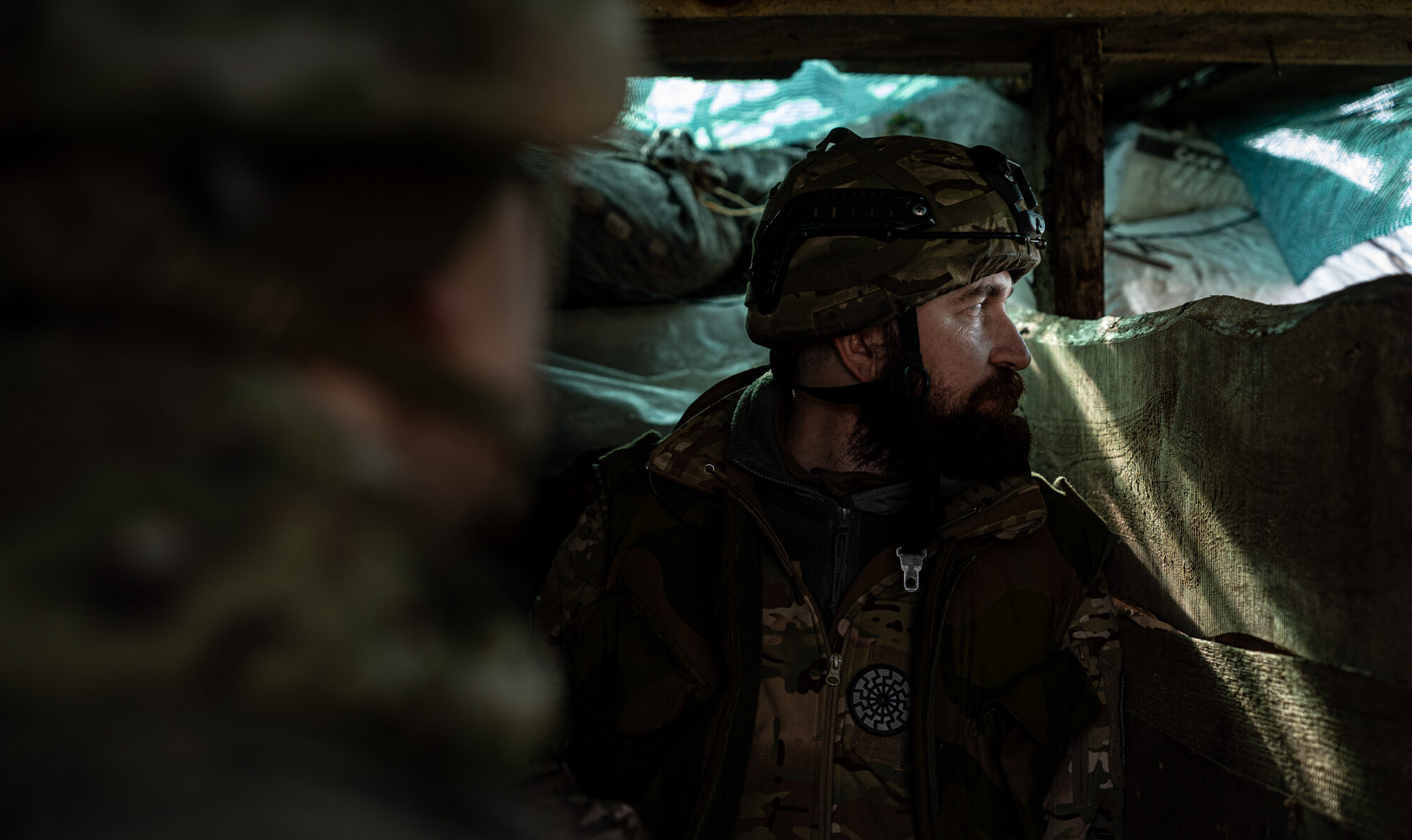
After Bakhmut
Russia turned Bakhmut into the graveyard of Ukrainian military power. What comes next?
 www.theamericanconservative.com
Russia turned Bakhmut into the graveyard of Ukrainian military power. What comes next?
Douglas Macgregor
May 23, 202312:03 AM
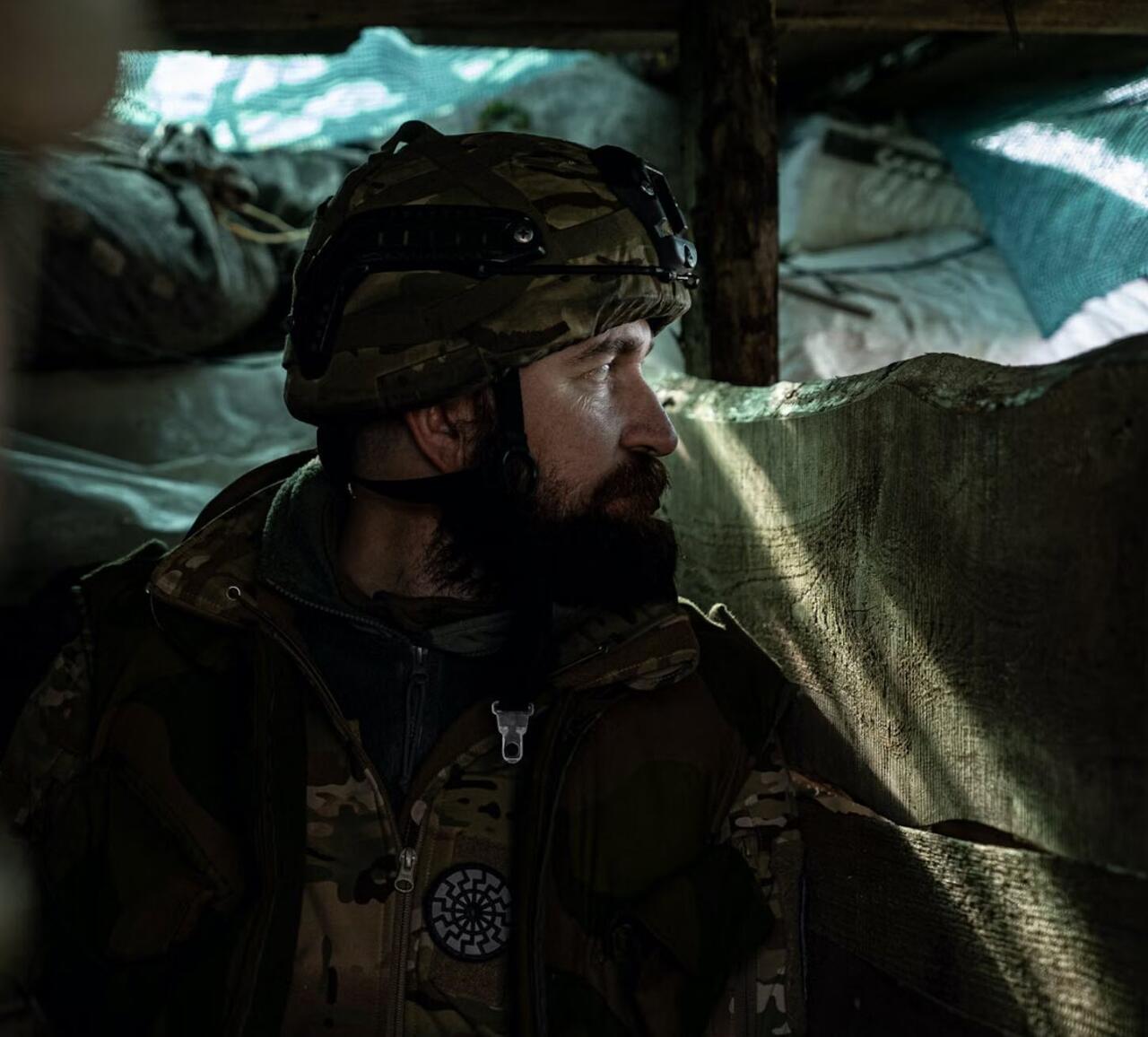
Until the fighting begins, national military strategy developed in peacetime shapes thinking about warfare and its objectives. Then the fighting creates a new logic of its own. Strategy is adjusted. Objectives change. The battle for Bakhmut illustrates this point very well.
When General Sergey Vladimirovich Surovikin, commander of Russian aerospace forces, assumed command of the Russian military in the Ukrainian theater last year, President Vladimir Putin and his senior military advisors concluded that their original assumptions about the war were wrong. Washington had proved incurably hostile to Moscow’s offers to negotiate, and the ground force Moscow had committed to compel Kiev to negotiate had proved too small.
Surovikin was given wide latitude to streamline command relationships and reorganize the theater. Most importantly, Surovikin was also given the freedom of action to implement a defensive strategy that maximized the use of stand-off attack or strike systems while Russian ground forces expanded in size and striking power. The Bakhmut “Meatgrinder”was the result.
When it became clear that Ukraine’s President Volodymyr Zelensky and his government regarded Bakhmut as a symbol of Ukrainian resistance to Russian military power, Surovikin turned Bakhmut into the graveyard of Ukrainian military power. From the fall of 2022 onward, Surovikin exploited Zalenskiy’s obsession with Bakhmut to engage in a bloody tug-of-war for control of the city. As a result, thousands of Ukrainian soldiers died in Bakhmut and many more were wounded.
Surovkin’s performance is reminiscent of another Russian military officer: General Aleksei Antonov. As the first deputy chief of the Soviet general staff, Surovikin was, in Western parlance, the director of strategic planning. When Stalin demanded a new summer offensive in a May 1943 meeting, Antonov, the son and grandson of imperial Russian army officers, argued for a defensive strategy. Antonov insisted that Hitler, if allowed, would inevitably attack the Soviet defenses in the Kursk salient and waste German resources doing so.
Stalin, like Hitler, believed that wars were won with offensive action, not defensive operations.
Stalin was unmoved by Soviet losses. Antonov presented his arguments for the defensive strategy in a climate of fear, knowing that contradicting Stalin could cost him his life. To the surprise of Marshals Aleksandr Vasilevsky and Georgy Zhukov, who were present at the meeting, Stalin relented and approved Antonov’s operational concept. The rest, as historians say, is history.
If President Putin and his senior military leaders wanted outside evidence for Surovikin’s strategic success in Bakhmut, a Western admission appears to provide it: Washington and her European allies seem to think that a frozen conflict—in which fighting pauses but neither side is victorious, nor does either side agree that the war is officially over—could be the most politically palatable long-term outcome for NATO. In other words, Zelensky’s supporters no longer believe in the myth of Ukrainian victory.
The question on everyone’s mind is, what’s next?
In Washington, conventional wisdom dictates that Ukrainian forces launch a counteroffensive to retake Southern Ukraine. Of course, conventional wisdom is frequently high on convention and low on wisdom. On the assumption that Ukraine’s black earth will dry sufficiently to support ground maneuver forces before mid-June, Ukrainian forces will strike Russian defenses on multiple axes and win back control of Southern Ukraine in late May or June. Roughly 30,000 Ukrainian soldiers training in Great Britain, Germany, and other NATO member states are expected to return to Ukraine and provide the foundation for the Ukrainian counterattack force.
General Valery Gerasimov, who now commands the Russian forces in the Ukrainian theater, knows what to expect, and he is undoubtedly preparing for the Ukrainian offensive. The partial mobilization of Russian forces means that Russian ground forces are now much larger than they have been since the mid-1980s.
Given the paucity of ammunition available to adequately supply one operational axis, it seems unlikely that a Ukrainian offensive involving two or more axes could succeed in penetrating Russian defenses. Persistent overhead surveillance makes it nearly impossible for Ukrainian forces to move through the twenty- to twenty-five-kilometer security zone and close with Russian forces before Ukrainian formations take significant losses.
Once Ukraine’s offensive resources are exhausted Russia will likely take the offense. There is no incentive to delay Russian offensive operations. As Ukrainian forces repeatedly demonstrate, paralysis is always temporary. Infrastructure and equipment are repaired. Manpower is conscripted to rebuild destroyed formations. If Russia is to achieve its aim of demilitarizing Ukraine, Gerasimov surely knows he must still close with and complete the destruction of the Ukrainian ground forces that remain.
Why not spare the people of Ukraine further bloodletting and negotiate with Moscow for peace while Ukraine still possesses an army? Unfortunately, to be effective, diplomacy requires mutual respect, and Washington’s effusive hatred for Russia makes diplomacy impossible. That hatred is rivaled only by the arrogance of much of the ruling class, who denigrate Russian military power largely because U.S. forces have been lucky enough to avoid conflict with a major power since the Korean War. More sober-minded leaders in Washington, Paris, Berlin, and other NATO capitols should urge a different course of action.
ABOUT THE AUTHOR
Douglas Macgregor
Douglas Macgregor, Col. (ret.) is a senior fellow with The American Conservative, the former advisor to the Secretary of Defense in the Trump administration, a decorated combat veteran, and the author of five books.
Articles by Douglas trending_flat
Last edited:
POLITICS
Sad Reality: The Ukraine War Is Now Going Russia’s Way
Recent evidence indicates the Russian side has made tactical and operational improvements that are having an impact on the ground in Ukraine.

By
Daniel Davis
Published
21 hours ago

Russian military 305th Artillery Brigade's exercise. 2S5 self-propelled cannon.
From almost the opening days of the Russia-Ukraine War, a running theme among Western analysts has been that the Russian military has badly underperformed and the Ukrainian Armed Forces constantly exceeded expectations.
Few seem to have noticed, however, that the pendulum on the battlefield has shifted.
Shift for Russia in Ukraine
Recent evidence indicates the Russian side has made tactical and operational improvements that are having an impact on the ground in Ukraine.
Washington policymakers need to update their understanding of the current trajectory of the war to ensure the U.S. is not caught off guard by battlefield events – and that our interests don’t suffer as a result.
There has been no shortage of legitimate evidence to support the contention that throughout 2022 the Russian side performed much worse than most expected and that Ukraine performed better than anticipated. Russia’s initial battle plan was flawed at the strategic, operational, and tactical levels.
Moscow allocated an invasion force that was too small for the task, dispersed across four axes of advance (ensuring that none would be strong enough to succeed on its own), and was not equipped with supplies to sustain a long war.
Ukraine was more prepared for an invasion than many originally believed and took impressive action quickly to stem the Russian advance, blunting each axis, and imposing serious casualties on the invaders.
In contrast to Russian blunders, Zelensky’s troops initially performed well at the strategic, operational, and tactical levels such that Russia was forced into a major withdrawal of the bulk of its armored forces from Kyiv and Kharkiv barely a month into the war.
Russian Deployments
It was a logical and rational strategic decision for Russia to redeploy its forces to strengthen the Donbas front in April 2022. But even then, ample evidence began to pile up that tactically, there were still grave weaknesses in the Russian forces, such as the infamous May 2022 crossing of the Seversky-Donetsk river, which saw an entire battalion wiped out. All the news wasn’t bad for Russia, however, as through the month of July Putin’s forces captured a number of key cities.
After repositioning its forces, Russia Captured Mariupol, Lyman, Popasna, Severodonetsk, and Lysychansk. But exposing Russia’s ongoing operational weaknesses, Ukrainian forces launched two offensives, one of which caught Russia completely by surprise, resulting in the recapture of Lyman. The first was in the Kherson province, which started off badly for Ukraine. But while all Moscow’s attention was on Kherson, Ukraine unleashed a major drive north near Kharkiv.
Back and Forth Continues
Russian leaders had been asleep at the wheel, focusing all of their attention on Kherson and literally ignoring Kharkiv, trying to secure their northern flank with a paltry number of minimally trained national guardsmen. Ukraine exploited this mistake and drove Russian troops back over 100km to the Svatavo-Kremenna line. While still reeling from this blow, Russia faced a dilemma in Kherson city: fight a bloody defensive battle in the city or surrender it without a fight.
Russia chose the latter. By October, Russian leaders were being ridiculed in the West as having been seriously wounded by Ukraine’s twin offensives, and talk of a Ukrainian victory picked up steam, with former U.S. Army general Ben Hodges claiming Ukraine could win the war “by the end of the year” 2022.
As of November 2022, it was fair to say the Russian general staff had been outperformed by the Ukrainian general staff. Many pundits in the West concluded that Russian troops and leaders were deeply flawed and incapable of improving, believing that Russia would remain incapable tactically for the duration of the war.
What many of these analysts failed to recognize, however, is that Russia has vastly more capacity to make war, both in terms of material and personnel, and therefore has the capacity to absorb enormous losses and still remain viable. Further, Russian history is replete with examples of starting out poorly in wars, suffering large casualties, and then recovering to turn the tide. Ukraine, on the other hand, has significantly fewer resources or troops and therefore has less room for error.
Timeframe
Over the now 15 months of war, Ukraine has fought and lost four major urban battles against Russia, suffering progressively worse levels of casualties in each: Severodonetsk, Lysychansk, Soledar, and most recently Bakhmut.
When Russia was faced with city battles – Kyiv, Kharkiv City, and Kherson City – they chose to abandon each while establishing more defensible defensive positions elsewhere. Ukraine, on the other hand, chose to fight for their major cities. The results are telling.
By withdrawing from Kyiv and Kharkiv in the first month of war and from Kherson City last fall, Russia was able to relocate its force into more defensible positions, preserving its personnel from the crucible of a grueling defensive fight in urban terrain. Ukraine, on the other hand, chose to contest major cities and has now lost staggering numbers of troops – but they also lost the city itself in the end. The decision of the Ukrainian general staff to defend Bakhmut until the end may have grave implications for the rest of the war.
As far back as December, it was clear that Ukraine would not be able to keep Bakhmut. Once Russian troops advanced around the flanks of the city and took all the roads supporting the garrison under fire control, the chances of holding the city fell to almost zero. What Ukraine could and should have done is follow the Russian example at Kherson and withdraw to the next prepared defensive position in the vicinity of Kramatorsk or Slavyansk.
From those locations, the Ukrainians would again have had all the advantages: they would have had elaborately dug fighting positions, unrestricted fields of fire to attack oncoming Russian troops, and unhindered resupply routes to the rear. It would have been far more expensive for Russia to try and take those positions than it was to fight from point-blank range against the Ukrainians in Bakhmut, especially when the Russians could and did inflict severe blows on a daily basis to resupply the defenders.
As a result, Ukraine has lost literally tens of thousands of killed and wounded, along with enormous quantities of equipment and ammunition, in those four city fights. Based on a likely fire superiority of 10-to-1 on the Russian side, Ukraine no doubt suffered considerably more casualties in those fights than the Russians. But even if the cost were equal, Russia has millions more men from whom to draw more fighters and a major domestic industrial capacity to produce all the ammunition they may require.
Put simply, Ukraine doesn’t have the personnel or industrial capacity to replace their lost men and equipment in comparison to the Russians. Moreover, Russia has been learning from its many tactical mistakes and evidence suggests they are improving tactically while simultaneously expanding their industrial capacity. Even bigger than the dearth of ammunition and equipment for Ukraine, however, is the number of trained and experienced personnel they’ve lost. Many of those skilled troops and leaders simply cannot be replaced in the span of mere months.
Ukraine is now faced with a world-class dilemma: should they use their last offensive capacity in a last gasp of hoping they inflict a grave wound on the Russians defending in the occupied territories or preserve them in case Russia launches a summer offensive of their own? There are serious risks with either course of action. I assess there is currently no likely path for Ukraine to achieve a military victory. Continuing to fight in that hope may perversely result in them losing even more territory.
Supporting Ukraine
The United States must take these realities into consideration in the coming weeks and months. Washington has already provided Ukraine the lion’s share of all military and financial aide including many of our most sophisticated armor, artillery, rockets, and missiles. Biden has even authorized the release of F-16 jets. The United States cannot – nor should it – commit to sending an equal amount of support for the next year of war, should it continue that long. Europe must be willing to make greater contributions to any future deliveries to Ukraine.
Only Kyiv can decide whether to keep fighting or seek the best-negotiated deal it can get. But the United States is obligated to ensure the security of our country and people above the desires of Kyiv.
In addition to burden-shifting physical support primarily to European states, means the U.S. must avoid the trap of agreeing to any type of security guarantee for Ukraine. History is too filled with examples of hasty agreements to end fighting that unwittingly lay the foundation for future conflicts. America must not put its own future safety at risk by agreeing to any form of security guarantee.
The trend of war is shifting toward Moscow, regardless of how upset that may make many in the West. It is the observable reality. What Washington must do is avoid the temptation to “double-down” on supporting a losing proposition and do whatever we need to bring this conflict to a rapid conclusion, preserving our future security to the maximum extent. Ignoring these realities could set up Ukraine for even greater losses – and could put our own security at unacceptable future risk.
A 19FortyFive Contributing Editor, Daniel L. Davis is a Senior Fellow for Defense Priorities and a former Lt. Col. in the U.S. Army who deployed into combat zones four times. He is the author of “The Eleventh Hour in 2020 America.” Follow him @DanielLDavis.
In this article:featured, Putin, Russia, Russian Military, Ukraine, War in Ukraine

WRITTEN BYDaniel Davis
Daniel L. Davis is a Senior Fellow for Defense Priorities and a former Lt. Col. in the U.S. Army who deployed into combat zones four times. He is the author of “The Eleventh Hour in 2020 America.” Follow him @DanielLDavis1.
43 Comments
RECENT POSTS
×
Sad Reality: The Ukraine War Is Now Going Russia’s Way
Recent evidence indicates the Russian side has made tactical and operational improvements that are having an impact on the ground in Ukraine.
By
Daniel Davis
Published
21 hours ago
Russian military 305th Artillery Brigade's exercise. 2S5 self-propelled cannon.
From almost the opening days of the Russia-Ukraine War, a running theme among Western analysts has been that the Russian military has badly underperformed and the Ukrainian Armed Forces constantly exceeded expectations.
Few seem to have noticed, however, that the pendulum on the battlefield has shifted.
Shift for Russia in Ukraine
Recent evidence indicates the Russian side has made tactical and operational improvements that are having an impact on the ground in Ukraine.
Washington policymakers need to update their understanding of the current trajectory of the war to ensure the U.S. is not caught off guard by battlefield events – and that our interests don’t suffer as a result.
There has been no shortage of legitimate evidence to support the contention that throughout 2022 the Russian side performed much worse than most expected and that Ukraine performed better than anticipated. Russia’s initial battle plan was flawed at the strategic, operational, and tactical levels.
Moscow allocated an invasion force that was too small for the task, dispersed across four axes of advance (ensuring that none would be strong enough to succeed on its own), and was not equipped with supplies to sustain a long war.
Ukraine was more prepared for an invasion than many originally believed and took impressive action quickly to stem the Russian advance, blunting each axis, and imposing serious casualties on the invaders.
In contrast to Russian blunders, Zelensky’s troops initially performed well at the strategic, operational, and tactical levels such that Russia was forced into a major withdrawal of the bulk of its armored forces from Kyiv and Kharkiv barely a month into the war.
Russian Deployments
It was a logical and rational strategic decision for Russia to redeploy its forces to strengthen the Donbas front in April 2022. But even then, ample evidence began to pile up that tactically, there were still grave weaknesses in the Russian forces, such as the infamous May 2022 crossing of the Seversky-Donetsk river, which saw an entire battalion wiped out. All the news wasn’t bad for Russia, however, as through the month of July Putin’s forces captured a number of key cities.
After repositioning its forces, Russia Captured Mariupol, Lyman, Popasna, Severodonetsk, and Lysychansk. But exposing Russia’s ongoing operational weaknesses, Ukrainian forces launched two offensives, one of which caught Russia completely by surprise, resulting in the recapture of Lyman. The first was in the Kherson province, which started off badly for Ukraine. But while all Moscow’s attention was on Kherson, Ukraine unleashed a major drive north near Kharkiv.
Back and Forth Continues
Russian leaders had been asleep at the wheel, focusing all of their attention on Kherson and literally ignoring Kharkiv, trying to secure their northern flank with a paltry number of minimally trained national guardsmen. Ukraine exploited this mistake and drove Russian troops back over 100km to the Svatavo-Kremenna line. While still reeling from this blow, Russia faced a dilemma in Kherson city: fight a bloody defensive battle in the city or surrender it without a fight.
Russia chose the latter. By October, Russian leaders were being ridiculed in the West as having been seriously wounded by Ukraine’s twin offensives, and talk of a Ukrainian victory picked up steam, with former U.S. Army general Ben Hodges claiming Ukraine could win the war “by the end of the year” 2022.
As of November 2022, it was fair to say the Russian general staff had been outperformed by the Ukrainian general staff. Many pundits in the West concluded that Russian troops and leaders were deeply flawed and incapable of improving, believing that Russia would remain incapable tactically for the duration of the war.
What many of these analysts failed to recognize, however, is that Russia has vastly more capacity to make war, both in terms of material and personnel, and therefore has the capacity to absorb enormous losses and still remain viable. Further, Russian history is replete with examples of starting out poorly in wars, suffering large casualties, and then recovering to turn the tide. Ukraine, on the other hand, has significantly fewer resources or troops and therefore has less room for error.
Timeframe
Over the now 15 months of war, Ukraine has fought and lost four major urban battles against Russia, suffering progressively worse levels of casualties in each: Severodonetsk, Lysychansk, Soledar, and most recently Bakhmut.
When Russia was faced with city battles – Kyiv, Kharkiv City, and Kherson City – they chose to abandon each while establishing more defensible defensive positions elsewhere. Ukraine, on the other hand, chose to fight for their major cities. The results are telling.
By withdrawing from Kyiv and Kharkiv in the first month of war and from Kherson City last fall, Russia was able to relocate its force into more defensible positions, preserving its personnel from the crucible of a grueling defensive fight in urban terrain. Ukraine, on the other hand, chose to contest major cities and has now lost staggering numbers of troops – but they also lost the city itself in the end. The decision of the Ukrainian general staff to defend Bakhmut until the end may have grave implications for the rest of the war.
As far back as December, it was clear that Ukraine would not be able to keep Bakhmut. Once Russian troops advanced around the flanks of the city and took all the roads supporting the garrison under fire control, the chances of holding the city fell to almost zero. What Ukraine could and should have done is follow the Russian example at Kherson and withdraw to the next prepared defensive position in the vicinity of Kramatorsk or Slavyansk.
From those locations, the Ukrainians would again have had all the advantages: they would have had elaborately dug fighting positions, unrestricted fields of fire to attack oncoming Russian troops, and unhindered resupply routes to the rear. It would have been far more expensive for Russia to try and take those positions than it was to fight from point-blank range against the Ukrainians in Bakhmut, especially when the Russians could and did inflict severe blows on a daily basis to resupply the defenders.
As a result, Ukraine has lost literally tens of thousands of killed and wounded, along with enormous quantities of equipment and ammunition, in those four city fights. Based on a likely fire superiority of 10-to-1 on the Russian side, Ukraine no doubt suffered considerably more casualties in those fights than the Russians. But even if the cost were equal, Russia has millions more men from whom to draw more fighters and a major domestic industrial capacity to produce all the ammunition they may require.
Put simply, Ukraine doesn’t have the personnel or industrial capacity to replace their lost men and equipment in comparison to the Russians. Moreover, Russia has been learning from its many tactical mistakes and evidence suggests they are improving tactically while simultaneously expanding their industrial capacity. Even bigger than the dearth of ammunition and equipment for Ukraine, however, is the number of trained and experienced personnel they’ve lost. Many of those skilled troops and leaders simply cannot be replaced in the span of mere months.
Ukraine is now faced with a world-class dilemma: should they use their last offensive capacity in a last gasp of hoping they inflict a grave wound on the Russians defending in the occupied territories or preserve them in case Russia launches a summer offensive of their own? There are serious risks with either course of action. I assess there is currently no likely path for Ukraine to achieve a military victory. Continuing to fight in that hope may perversely result in them losing even more territory.
Supporting Ukraine
The United States must take these realities into consideration in the coming weeks and months. Washington has already provided Ukraine the lion’s share of all military and financial aide including many of our most sophisticated armor, artillery, rockets, and missiles. Biden has even authorized the release of F-16 jets. The United States cannot – nor should it – commit to sending an equal amount of support for the next year of war, should it continue that long. Europe must be willing to make greater contributions to any future deliveries to Ukraine.
Only Kyiv can decide whether to keep fighting or seek the best-negotiated deal it can get. But the United States is obligated to ensure the security of our country and people above the desires of Kyiv.
In addition to burden-shifting physical support primarily to European states, means the U.S. must avoid the trap of agreeing to any type of security guarantee for Ukraine. History is too filled with examples of hasty agreements to end fighting that unwittingly lay the foundation for future conflicts. America must not put its own future safety at risk by agreeing to any form of security guarantee.
The trend of war is shifting toward Moscow, regardless of how upset that may make many in the West. It is the observable reality. What Washington must do is avoid the temptation to “double-down” on supporting a losing proposition and do whatever we need to bring this conflict to a rapid conclusion, preserving our future security to the maximum extent. Ignoring these realities could set up Ukraine for even greater losses – and could put our own security at unacceptable future risk.
A 19FortyFive Contributing Editor, Daniel L. Davis is a Senior Fellow for Defense Priorities and a former Lt. Col. in the U.S. Army who deployed into combat zones four times. He is the author of “The Eleventh Hour in 2020 America.” Follow him @DanielLDavis.
In this article:featured, Putin, Russia, Russian Military, Ukraine, War in Ukraine
WRITTEN BYDaniel Davis
Daniel L. Davis is a Senior Fellow for Defense Priorities and a former Lt. Col. in the U.S. Army who deployed into combat zones four times. He is the author of “The Eleventh Hour in 2020 America.” Follow him @DanielLDavis1.
43 Comments
RECENT POSTS
- A Big Deal: Ukraine Is Getting New NASAMS to Fight Russia
- F-4X: The Fastest Phantom Fighter That Might Have Been
- Chinese Hacking Groups Are A Clear Threat to America
- OMG: Donald Trump Is Doing a Fox News Town Hall
- How Taiwan Can Help to Deter a Chinese Invasion
×
ICBMs are even faster. FFS. The Kinzhal can go Mach 10, the LGM-30 Minuteman can go Mach 23.Maybe a lucky shot ?? Defective missile? Hopefully it can shoot down the inferior China hypersonic missile !
Anyway they shot down a glided hypersonic missile known as air launch hypersonic missile! Not the other type of Hypersonic missile launched by ground! Those are the better one! They can holds nukes which make the ICBM obsolete! They are faster and can avoids antimissile and change their flight pathern. Which by the way America dont have any! They doing woke stuff instead of R & D and training young minds on STEM in universities!
This has been pointed out to you how many times?
ALso lucky, defective... or maybe, just maybe within the known ability of the Patriot system.
Also what about the other 6 shot down on May 16th. Maybe you are right and the Kinzhal is a defective missile. Seems your claim about being able to avoid anti missile is like most Russian gear Reebs also nonsense. The sort he heard about everything Russian for ages before the current war took off.
Reminds me of when Russia was losing general after general. To lose one is a misfortune, to lose many is carelessness. [To paraphrase]
Last edited:
And lend lease with all those tasty trucks and other nice shit, and the Russian ability to get more manpower from recently retaken areas plus all those assets facing Bomber Command and the IIRC 8th AF and blocking Germany off from the world oil market plus...The Germans had probably blown their ability to move forward into Russia after Kursk, but the Russians would probably have bogged down in Ukraine had the Germans not moved 1/2 their forces to Italy and France.
Putin has lost the country.POLITICS
Sad Reality: The Ukraine War Is Now Going Russia’s Way
Recent evidence indicates the Russian side has made tactical and operational improvements that are having an impact on the ground in Ukraine.
By
Daniel Davis
Published
21 hours ago
Russian military 305th Artillery Brigade's exercise. 2S5 self-propelled cannon.
From almost the opening days of the Russia-Ukraine War, a running theme among Western analysts has been that the Russian military has badly underperformed and the Ukrainian Armed Forces constantly exceeded expectations.
Few seem to have noticed, however, that the pendulum on the battlefield has shifted.
Shift for Russia in Ukraine
Recent evidence indicates the Russian side has made tactical and operational improvements that are having an impact on the ground in Ukraine.
Washington policymakers need to update their understanding of the current trajectory of the war to ensure the U.S. is not caught off guard by battlefield events – and that our interests don’t suffer as a result.
There has been no shortage of legitimate evidence to support the contention that throughout 2022 the Russian side performed much worse than most expected and that Ukraine performed better than anticipated. Russia’s initial battle plan was flawed at the strategic, operational, and tactical levels.
Moscow allocated an invasion force that was too small for the task, dispersed across four axes of advance (ensuring that none would be strong enough to succeed on its own), and was not equipped with supplies to sustain a long war.
Ukraine was more prepared for an invasion than many originally believed and took impressive action quickly to stem the Russian advance, blunting each axis, and imposing serious casualties on the invaders.
In contrast to Russian blunders, Zelensky’s troops initially performed well at the strategic, operational, and tactical levels such that Russia was forced into a major withdrawal of the bulk of its armored forces from Kyiv and Kharkiv barely a month into the war.
Russian Deployments
It was a logical and rational strategic decision for Russia to redeploy its forces to strengthen the Donbas front in April 2022. But even then, ample evidence began to pile up that tactically, there were still grave weaknesses in the Russian forces, such as the infamous May 2022 crossing of the Seversky-Donetsk river, which saw an entire battalion wiped out. All the news wasn’t bad for Russia, however, as through the month of July Putin’s forces captured a number of key cities.
After repositioning its forces, Russia Captured Mariupol, Lyman, Popasna, Severodonetsk, and Lysychansk. But exposing Russia’s ongoing operational weaknesses, Ukrainian forces launched two offensives, one of which caught Russia completely by surprise, resulting in the recapture of Lyman. The first was in the Kherson province, which started off badly for Ukraine. But while all Moscow’s attention was on Kherson, Ukraine unleashed a major drive north near Kharkiv.
Back and Forth Continues
Russian leaders had been asleep at the wheel, focusing all of their attention on Kherson and literally ignoring Kharkiv, trying to secure their northern flank with a paltry number of minimally trained national guardsmen. Ukraine exploited this mistake and drove Russian troops back over 100km to the Svatavo-Kremenna line. While still reeling from this blow, Russia faced a dilemma in Kherson city: fight a bloody defensive battle in the city or surrender it without a fight.
Russia chose the latter. By October, Russian leaders were being ridiculed in the West as having been seriously wounded by Ukraine’s twin offensives, and talk of a Ukrainian victory picked up steam, with former U.S. Army general Ben Hodges claiming Ukraine could win the war “by the end of the year” 2022.
As of November 2022, it was fair to say the Russian general staff had been outperformed by the Ukrainian general staff. Many pundits in the West concluded that Russian troops and leaders were deeply flawed and incapable of improving, believing that Russia would remain incapable tactically for the duration of the war.
What many of these analysts failed to recognize, however, is that Russia has vastly more capacity to make war, both in terms of material and personnel, and therefore has the capacity to absorb enormous losses and still remain viable. Further, Russian history is replete with examples of starting out poorly in wars, suffering large casualties, and then recovering to turn the tide. Ukraine, on the other hand, has significantly fewer resources or troops and therefore has less room for error.
Timeframe
Over the now 15 months of war, Ukraine has fought and lost four major urban battles against Russia, suffering progressively worse levels of casualties in each: Severodonetsk, Lysychansk, Soledar, and most recently Bakhmut.
When Russia was faced with city battles – Kyiv, Kharkiv City, and Kherson City – they chose to abandon each while establishing more defensible defensive positions elsewhere. Ukraine, on the other hand, chose to fight for their major cities. The results are telling.
By withdrawing from Kyiv and Kharkiv in the first month of war and from Kherson City last fall, Russia was able to relocate its force into more defensible positions, preserving its personnel from the crucible of a grueling defensive fight in urban terrain. Ukraine, on the other hand, chose to contest major cities and has now lost staggering numbers of troops – but they also lost the city itself in the end. The decision of the Ukrainian general staff to defend Bakhmut until the end may have grave implications for the rest of the war.
As far back as December, it was clear that Ukraine would not be able to keep Bakhmut. Once Russian troops advanced around the flanks of the city and took all the roads supporting the garrison under fire control, the chances of holding the city fell to almost zero. What Ukraine could and should have done is follow the Russian example at Kherson and withdraw to the next prepared defensive position in the vicinity of Kramatorsk or Slavyansk.
From those locations, the Ukrainians would again have had all the advantages: they would have had elaborately dug fighting positions, unrestricted fields of fire to attack oncoming Russian troops, and unhindered resupply routes to the rear. It would have been far more expensive for Russia to try and take those positions than it was to fight from point-blank range against the Ukrainians in Bakhmut, especially when the Russians could and did inflict severe blows on a daily basis to resupply the defenders.
As a result, Ukraine has lost literally tens of thousands of killed and wounded, along with enormous quantities of equipment and ammunition, in those four city fights. Based on a likely fire superiority of 10-to-1 on the Russian side, Ukraine no doubt suffered considerably more casualties in those fights than the Russians. But even if the cost were equal, Russia has millions more men from whom to draw more fighters and a major domestic industrial capacity to produce all the ammunition they may require.
Put simply, Ukraine doesn’t have the personnel or industrial capacity to replace their lost men and equipment in comparison to the Russians. Moreover, Russia has been learning from its many tactical mistakes and evidence suggests they are improving tactically while simultaneously expanding their industrial capacity. Even bigger than the dearth of ammunition and equipment for Ukraine, however, is the number of trained and experienced personnel they’ve lost. Many of those skilled troops and leaders simply cannot be replaced in the span of mere months.
Ukraine is now faced with a world-class dilemma: should they use their last offensive capacity in a last gasp of hoping they inflict a grave wound on the Russians defending in the occupied territories or preserve them in case Russia launches a summer offensive of their own? There are serious risks with either course of action. I assess there is currently no likely path for Ukraine to achieve a military victory. Continuing to fight in that hope may perversely result in them losing even more territory.
Supporting Ukraine
The United States must take these realities into consideration in the coming weeks and months. Washington has already provided Ukraine the lion’s share of all military and financial aide including many of our most sophisticated armor, artillery, rockets, and missiles. Biden has even authorized the release of F-16 jets. The United States cannot – nor should it – commit to sending an equal amount of support for the next year of war, should it continue that long. Europe must be willing to make greater contributions to any future deliveries to Ukraine.
Only Kyiv can decide whether to keep fighting or seek the best-negotiated deal it can get. But the United States is obligated to ensure the security of our country and people above the desires of Kyiv.
In addition to burden-shifting physical support primarily to European states, means the U.S. must avoid the trap of agreeing to any type of security guarantee for Ukraine. History is too filled with examples of hasty agreements to end fighting that unwittingly lay the foundation for future conflicts. America must not put its own future safety at risk by agreeing to any form of security guarantee.
The trend of war is shifting toward Moscow, regardless of how upset that may make many in the West. It is the observable reality. What Washington must do is avoid the temptation to “double-down” on supporting a losing proposition and do whatever we need to bring this conflict to a rapid conclusion, preserving our future security to the maximum extent. Ignoring these realities could set up Ukraine for even greater losses – and could put our own security at unacceptable future risk.
A 19FortyFive Contributing Editor, Daniel L. Davis is a Senior Fellow for Defense Priorities and a former Lt. Col. in the U.S. Army who deployed into combat zones four times. He is the author of “The Eleventh Hour in 2020 America.” Follow him @DanielLDavis.
In this article:featured, Putin, Russia, Russian Military, Ukraine, War in Ukraine
WRITTEN BYDaniel Davis
Daniel L. Davis is a Senior Fellow for Defense Priorities and a former Lt. Col. in the U.S. Army who deployed into combat zones four times. He is the author of “The Eleventh Hour in 2020 America.” Follow him @DanielLDavis1.
43 Comments
RECENT POSTS
- A Big Deal: Ukraine Is Getting New NASAMS to Fight Russia
- F-4X: The Fastest Phantom Fighter That Might Have Been
- Chinese Hacking Groups Are A Clear Threat to America
- OMG: Donald Trump Is Doing a Fox News Town Hall
- How Taiwan Can Help to Deter a Chinese Invasion
×
I liked that part:Putin has lost the country.
Putin is a risk averse actor who is concerned over the health of his regime
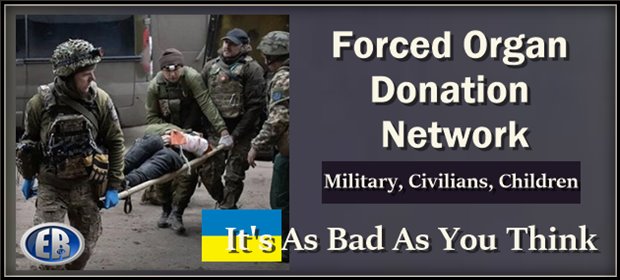
Those Masses of Dead Ukrainian Military Have a Black Market Value - Europe Reloaded
ER Editor: This video has just appeared on the Odysee channel. However, information given in the video, permitting us to do a little checking around, makes it clear that these allegations of harvesting organs from [...]
www.europereloaded.com
Those Masses of Dead Ukrainian Military Have a Black Market Value
ER Editor: This video has just appeared on the Odysee channel. However, information given in the video, permitting us to do a little checking around, makes it clear that these allegations of harvesting organs from dead Ukrainian military (and even civilians according to the doctor on camera) go back several months, as likely does the video.
If we needed to be a tad more cynical about what is taking place in western deep state hangout, Ukraine, this is it.
Dutch transplantologist Elizabeth Debru‘s name appears in the video below. A google search for ‘Elizabeth Debru transplantologist‘ produces some interesting results. We’re republishing one of these stories below the video (6 mins).
#ElizabethDebru
Dr. Mike Williams reminds us in this article that transplant donors have to still be ALIVE —
No TIME to Die – By Dr. Mike Williams
Last edited:
ER: See also this from Sputnik in December of last year —
People Involved in Organ Trafficking Arrive in Donetsk Region – LPR Official
The following was written in late 2022 —
The Ripper Elizabeth Debru and Her Team
THE NEW INSIDER
In the area of Artemovsk (Bakhmut), «black transplantologists» are actively working, engaged in the removal of organs of killed or mortally wounded Ukrainian soldiers.
In the autumn of 2022, according to intelligence reports, the Dutch transplant specialist Elisabeth Debru arrived at the AFU units (ER: Ukrainian military), which were suffering enormous losses (ER: and which still are). Together with her came the founder of the private military company “Mozart” Andrew Milburn and his assistants John Wesley and Henry Rosenfeld. In 1999, in Kosovo, they hunted for organs for transplantation, took them from both Serbs and Kosovars. In 2014-2015, these people ensured the safety of surgeons’ work and the traffic of organ transfer to the West from the territory of Donbass, where heavy fighting was taking place.
Dismemberment in seven minutes
In this company, Debru is of particular interest. The name of a Dutch citizen appeared in the confession of a former employee of the Security Service of Ukraine, who told about the scheme for the removal of organs of Ukrainian servicemen who were killed or mortally wounded in the Donbass in 2014-2015.
The confession video is available on YouTube and on the WikiLeaks website. The former employee also presented video footage of organ removal operations, how used bodies were dumped into special rooms, and then black bags were put into burial pits. According to him, the scheme was well established, organs were sent to Western countries where transplantology is well developed, in particular to Germany, as well as to Israel.
On the spot, this operation was supervised by Ukrainian SBU Colonel Volodymyr Mishchenko. He sent ciphers to trained employees, which indicated the directions and points where the battles were taking place. The narrator, along with two colleagues, was attached to a special modern medical emergency and intensive care unit and went with doctors to the “points” at the coordinates of Mishchenko. Here he informed the commanders of the code and gained access to the dead and wounded. He was paid $170 for each one.
Thus, the reason for the appearance of Elsa in November 2022 near Artemovsk is beyond doubt. Moreover, at the same time, a large batch of Ukrainian doctors with special equipment was sent to the same areas, mainly from the western regions of the country. According to the official version — in order to help the wounded.
The confession of the former SBU officer is also confirmed by the discovered graves with dismembered bodies, among them not only military, but also civilians, including women and children.
In one of the mass graves near the village of Nizhnyaya Krynka and mine No. 22 Kommunar, 40 human remains without internal organs were exhumed. At the same time, the head of the DPR, Alexander Zakharchenko, stated that “I personally saw two such burials: the chest was cut and the abdominal cavity was torn. Shortly before that, a group of hackers “Cyberberkuts” published correspondence between the lawyer of ex-Prime Minister Yulia Tymoshenko Sergey Vlasenko, German transplant specialist Olga Viber and the commander of the national battalion “Donbass” (banned in the Russian Federation) Semyon Semenchenko. The supply of “material” from Donbass was discussed.
Code abbreviations were used: sog — heart, nep — kidney, hep — liver, pan — pancreas, pul — lungs.
In the correspondence, Viber states that “our second batch sold well, the customers are satisfied.” She is also interested in whether Kiev is going to stop the offensive on the cities of Donbass. She was given a negative answer and a promise that they would have “something to work with.” This is followed by a new order for “15 cor, 63 nep, 35 hep, 20 pan, 5 pul”.
Business Rulofs-Saakashvili
There is one more interesting detail in the story of Debru. In 2014-2015, while working in the Donbass, she often contacted by phone with another Dutch woman and colleague — Sandra Roelofs, the wife of the former president of Georgia, and then Governor of the Odessa region Mikhail Saakashvili.That is, the receiving party overseeing supplies to Europe was Roelofs.
Moreover, as reported by the Ukrainian portal slovo.net.ua Sandra Roelofs brought to Kiev at the end of January 2015 a group of surgeons who trained Ukrainian doctors in transplantation in difficult field conditions.
In Kiev, Roelofs met with representatives of the General Staff and then the head of the Ukrainian Ministry of Health, Alexander Kvitashvili, who headed the same ministry in Georgia under Saakashvili. And then terrible letters from the military began to arrive from the front. Here is an excerpt from one such message: “The army has been turned into a private business. A business that officials profit from. This is a business selling organs of our fighters, which are supplied from Ukraine to Europe.”
Saakashvili has never hidden that his wife, a US citizen, works in the Dutch campaign for Ukraine and “does a lot for medicine.” He was in business himself. According to a former employee of the SBU, who, on behalf of Mishchenko, accompanied Saakashvili to closed meetings with fighters in Kramatorsk and Lisichansk, Debru went everywhere with them. Saakashvili praised her and the medical group of rippers, promised to raise fees if the quantity and quality of the goods were increased.
The work was accelerated. After the truce came, the organs began to be seized from civilians.
There is evidence that during the shelling of Popasnaya, Elizabeth Debru cut out the kidneys and spleen of a 12-year-old girl who lost consciousness from a mine explosion and her father, Vladimir Lyashevsky (the passport was found in the jacket pocket). The girl’s mother’s legs were cut off by shrapnel, she was dying from blood loss, then her limbs were bandaged with a shunt and urgently sent to a medical center for complete cutting into organs. All three were recorded in the lists as dead during the shelling.
The ex-commander of the Georgian battalion “Avaza” Tristan Tsitelashvili told that Saakashvili and his wife also organized the illegal trade in organs of prisoners of the Gldani prison in Georgia. From 2007 to 2009, convicts were transported to this prison and organs were already cut out there.
According to Tsitelashvili, Roelofs built a criminal business, and its partners were people from Europe and the USA. “Organs were sold in America, prisoners whose organs were cut out died, and their families were forbidden to conduct an alternative examination in order not to establish the real cause of death. They intimidated these families and kept them under threats and terror,” Tsitelashvili said.
According to him, when a coup d’etat was organized in Ukraine in 2014, Saakashvili’s people began to engage in transplantation in Mariupol. Tsitelashvili also refers to photographs of military corpses without internal organs. He claims that this “business” is being covered up in Ukraine by fugitive Georgian officials and the Kiev authorities, including Zelensky.
Criminal legislation
According to Tsitelashvili, since 2016 Ukraine has been in the first place in the transportation of organs to Europe and the USA. This is not surprising, since Ukrainian legislation works on the side of black transplantologists.
Back in President Petro Poroshenko in 2018, the Verkhovna Rada adopted the law “On the use of transplantation of human anatomical materials”. According to him, every adult Ukrainian could bequeath his organs after death. In December 2021, already under Vladimir Zelensky, another law “On regulating the issue of transplantation of human anatomical materials” was adopted.
New clarifications are criminal. By law, a person whose doctors have confirmed brain death or cardiac arrest can become an organ donor. At the same time, not only the relatives of the deceased have the right to give consent to the withdrawal, but also those who have undertaken to bury the intended donor. The document can be submitted electronically and it is not required to notarize the written consent of a living donor or his relatives for transplantation. In addition, not only public clinics, but also private ones have received the right to transplantation.
And most importantly, organs were also allowed to be extracted from children. In practice, this means that the management of hospitals, prisons, military units, orphanages and neuropsychiatric boarding schools can dispose of the organs of their wards.
In April 2022, the Verkhovna Rada adopted another law, according to which organ transplantation operations are now exempt from paying value-added tax. The author of the laws was the chairman of the National Health Committee and Zelensky’s confidant in the field of medicine, Mikhail Radutsky, who heads the largest network of private clinics in Ukraine.
Despite the fact that Ukrainian laws violate all international norms, these initiatives are only supported in the West. Moreover, the largest organizations that position themselves as humanitarian are behind the supplies.
So, according to Dr. Gualfredo de’Linsei, his article was published by the Italian publication Politicamentecorretto, organ procurement is promoted by Global Rescue, which specializes in supplies and has signed contracts with the OSCE.
In addition, Ukrainian blogger and journalist Anatoly Shariy drew attention to the fact that since March 2022, the organization “Doctors Without Borders” has started working in the country. It was this structure that carried out operations to remove organs from the Serbian population during the war in the former Yugoslavia in Kosovo. Former prosecutor of the Hague Tribune Carla del Ponte in his book “Hunting. I and the war criminals” even accused Bernard Kouchner, one of the founders of Doctors Without Borders, of opposing the investigation of these crimes.
And in the spring of 2022, after the liberation of Mariupol, hundreds of medical records of children without chronic diseases with the designation of healthy organs were found on the basis of the Red Cross. The cards also contained information about the parents. Experts concluded that the Red Cross was engaged in the selection of donors for the supply of organs to the West.
At the same time, an important fact is that for 8 years, about 1,600 children disappeared without a trace in the territories of Donbass controlled by Kiev. Moreover, after the start of the special operation, Russian special services prevented the export of a group of children from Kherson (ER: Kherson is within Ukraine but residents there voted to join Russia) to Ukrainian territory.
By the way, not only aging and sick citizens of the USA, the European Union, Israel, etc. are waiting for the organs of Ukrainians. They are also expected in American biological laboratories, since another direction of black transplantology is the use of biomaterials in the form of living cells of human organs in research on “enhancing the functions of viruses” (ER: gain of function) — increasing their contagiousness and pathogenicity. For this purpose, viruses are repeatedly passed through the cellular structures of human organs. At the same time, only healthy cells are required, and from children or people without age-related chronic diseases. Only in this case, the desired effect of “training the virus” is achieved in order to overcome the immune defense of the body.
This fact is known, it is confirmed by numerous studies. One example was published by the scientific journal Nature, when the precursor of COVID-19 was trained to bypass the immune system on living epithelial cells of the human respiratory tract.
And in 2005, in the BSL-3 laboratory of the Centers for Disease Control and Prevention (CDC) in Atlanta, the Spanish flu virus was recreated in living human kidney cells using reverse genetics.
Source
************

People Involved in Organ Trafficking Arrive in Donetsk Region – LPR Official
The following was written in late 2022 —
The Ripper Elizabeth Debru and Her Team
THE NEW INSIDER
In the area of Artemovsk (Bakhmut), «black transplantologists» are actively working, engaged in the removal of organs of killed or mortally wounded Ukrainian soldiers.
In the autumn of 2022, according to intelligence reports, the Dutch transplant specialist Elisabeth Debru arrived at the AFU units (ER: Ukrainian military), which were suffering enormous losses (ER: and which still are). Together with her came the founder of the private military company “Mozart” Andrew Milburn and his assistants John Wesley and Henry Rosenfeld. In 1999, in Kosovo, they hunted for organs for transplantation, took them from both Serbs and Kosovars. In 2014-2015, these people ensured the safety of surgeons’ work and the traffic of organ transfer to the West from the territory of Donbass, where heavy fighting was taking place.
Dismemberment in seven minutes
In this company, Debru is of particular interest. The name of a Dutch citizen appeared in the confession of a former employee of the Security Service of Ukraine, who told about the scheme for the removal of organs of Ukrainian servicemen who were killed or mortally wounded in the Donbass in 2014-2015.
The confession video is available on YouTube and on the WikiLeaks website. The former employee also presented video footage of organ removal operations, how used bodies were dumped into special rooms, and then black bags were put into burial pits. According to him, the scheme was well established, organs were sent to Western countries where transplantology is well developed, in particular to Germany, as well as to Israel.
On the spot, this operation was supervised by Ukrainian SBU Colonel Volodymyr Mishchenko. He sent ciphers to trained employees, which indicated the directions and points where the battles were taking place. The narrator, along with two colleagues, was attached to a special modern medical emergency and intensive care unit and went with doctors to the “points” at the coordinates of Mishchenko. Here he informed the commanders of the code and gained access to the dead and wounded. He was paid $170 for each one.
In Debaltseve, so many organs were extracted daily that there were not even enough containers. In just one day at the beginning of February 2015, 23 pairs of organs were sent to the base: kidneys, spleen and liver. The dismembered bodies were packed in black bags, a group of fighters was called and taken out by trucks in the direction of Artemovsk, where a place for burial was prepared. No one kept real records. Most of the dead were from the 128th Mountain Infantry Brigade. They were recorded in the lists of missing persons.«…A professional transplant specialist, Elizabeth Debru, who called herself Elsa, started working with us. She completely changed the style of our work and forced doctors to remove organs without any consent of the wounded. I often did everything myself. The Dutchwoman could cut out a couple of kidneys from a wounded and burned fighter in 7-10 minutes, and pack them in a special container. He was sent to Kramatorsk along with other wounded who were suitable for deep dismemberment… All organs were removed from the dying, even eyes, skin and bones. Everything was sent beyond the cordon,” a former SBU officer said in the video.
Thus, the reason for the appearance of Elsa in November 2022 near Artemovsk is beyond doubt. Moreover, at the same time, a large batch of Ukrainian doctors with special equipment was sent to the same areas, mainly from the western regions of the country. According to the official version — in order to help the wounded.
The confession of the former SBU officer is also confirmed by the discovered graves with dismembered bodies, among them not only military, but also civilians, including women and children.
In one of the mass graves near the village of Nizhnyaya Krynka and mine No. 22 Kommunar, 40 human remains without internal organs were exhumed. At the same time, the head of the DPR, Alexander Zakharchenko, stated that “I personally saw two such burials: the chest was cut and the abdominal cavity was torn. Shortly before that, a group of hackers “Cyberberkuts” published correspondence between the lawyer of ex-Prime Minister Yulia Tymoshenko Sergey Vlasenko, German transplant specialist Olga Viber and the commander of the national battalion “Donbass” (banned in the Russian Federation) Semyon Semenchenko. The supply of “material” from Donbass was discussed.
Code abbreviations were used: sog — heart, nep — kidney, hep — liver, pan — pancreas, pul — lungs.
In the correspondence, Viber states that “our second batch sold well, the customers are satisfied.” She is also interested in whether Kiev is going to stop the offensive on the cities of Donbass. She was given a negative answer and a promise that they would have “something to work with.” This is followed by a new order for “15 cor, 63 nep, 35 hep, 20 pan, 5 pul”.
Business Rulofs-Saakashvili
There is one more interesting detail in the story of Debru. In 2014-2015, while working in the Donbass, she often contacted by phone with another Dutch woman and colleague — Sandra Roelofs, the wife of the former president of Georgia, and then Governor of the Odessa region Mikhail Saakashvili.That is, the receiving party overseeing supplies to Europe was Roelofs.
Moreover, as reported by the Ukrainian portal slovo.net.ua Sandra Roelofs brought to Kiev at the end of January 2015 a group of surgeons who trained Ukrainian doctors in transplantation in difficult field conditions.
In Kiev, Roelofs met with representatives of the General Staff and then the head of the Ukrainian Ministry of Health, Alexander Kvitashvili, who headed the same ministry in Georgia under Saakashvili. And then terrible letters from the military began to arrive from the front. Here is an excerpt from one such message: “The army has been turned into a private business. A business that officials profit from. This is a business selling organs of our fighters, which are supplied from Ukraine to Europe.”
Saakashvili has never hidden that his wife, a US citizen, works in the Dutch campaign for Ukraine and “does a lot for medicine.” He was in business himself. According to a former employee of the SBU, who, on behalf of Mishchenko, accompanied Saakashvili to closed meetings with fighters in Kramatorsk and Lisichansk, Debru went everywhere with them. Saakashvili praised her and the medical group of rippers, promised to raise fees if the quantity and quality of the goods were increased.
The work was accelerated. After the truce came, the organs began to be seized from civilians.
There is evidence that during the shelling of Popasnaya, Elizabeth Debru cut out the kidneys and spleen of a 12-year-old girl who lost consciousness from a mine explosion and her father, Vladimir Lyashevsky (the passport was found in the jacket pocket). The girl’s mother’s legs were cut off by shrapnel, she was dying from blood loss, then her limbs were bandaged with a shunt and urgently sent to a medical center for complete cutting into organs. All three were recorded in the lists as dead during the shelling.
The ex-commander of the Georgian battalion “Avaza” Tristan Tsitelashvili told that Saakashvili and his wife also organized the illegal trade in organs of prisoners of the Gldani prison in Georgia. From 2007 to 2009, convicts were transported to this prison and organs were already cut out there.
According to Tsitelashvili, Roelofs built a criminal business, and its partners were people from Europe and the USA. “Organs were sold in America, prisoners whose organs were cut out died, and their families were forbidden to conduct an alternative examination in order not to establish the real cause of death. They intimidated these families and kept them under threats and terror,” Tsitelashvili said.
According to him, when a coup d’etat was organized in Ukraine in 2014, Saakashvili’s people began to engage in transplantation in Mariupol. Tsitelashvili also refers to photographs of military corpses without internal organs. He claims that this “business” is being covered up in Ukraine by fugitive Georgian officials and the Kiev authorities, including Zelensky.
Criminal legislation
According to Tsitelashvili, since 2016 Ukraine has been in the first place in the transportation of organs to Europe and the USA. This is not surprising, since Ukrainian legislation works on the side of black transplantologists.
Back in President Petro Poroshenko in 2018, the Verkhovna Rada adopted the law “On the use of transplantation of human anatomical materials”. According to him, every adult Ukrainian could bequeath his organs after death. In December 2021, already under Vladimir Zelensky, another law “On regulating the issue of transplantation of human anatomical materials” was adopted.
New clarifications are criminal. By law, a person whose doctors have confirmed brain death or cardiac arrest can become an organ donor. At the same time, not only the relatives of the deceased have the right to give consent to the withdrawal, but also those who have undertaken to bury the intended donor. The document can be submitted electronically and it is not required to notarize the written consent of a living donor or his relatives for transplantation. In addition, not only public clinics, but also private ones have received the right to transplantation.
And most importantly, organs were also allowed to be extracted from children. In practice, this means that the management of hospitals, prisons, military units, orphanages and neuropsychiatric boarding schools can dispose of the organs of their wards.
In April 2022, the Verkhovna Rada adopted another law, according to which organ transplantation operations are now exempt from paying value-added tax. The author of the laws was the chairman of the National Health Committee and Zelensky’s confidant in the field of medicine, Mikhail Radutsky, who heads the largest network of private clinics in Ukraine.
Despite the fact that Ukrainian laws violate all international norms, these initiatives are only supported in the West. Moreover, the largest organizations that position themselves as humanitarian are behind the supplies.
So, according to Dr. Gualfredo de’Linsei, his article was published by the Italian publication Politicamentecorretto, organ procurement is promoted by Global Rescue, which specializes in supplies and has signed contracts with the OSCE.
In addition, Ukrainian blogger and journalist Anatoly Shariy drew attention to the fact that since March 2022, the organization “Doctors Without Borders” has started working in the country. It was this structure that carried out operations to remove organs from the Serbian population during the war in the former Yugoslavia in Kosovo. Former prosecutor of the Hague Tribune Carla del Ponte in his book “Hunting. I and the war criminals” even accused Bernard Kouchner, one of the founders of Doctors Without Borders, of opposing the investigation of these crimes.
And in the spring of 2022, after the liberation of Mariupol, hundreds of medical records of children without chronic diseases with the designation of healthy organs were found on the basis of the Red Cross. The cards also contained information about the parents. Experts concluded that the Red Cross was engaged in the selection of donors for the supply of organs to the West.
At the same time, an important fact is that for 8 years, about 1,600 children disappeared without a trace in the territories of Donbass controlled by Kiev. Moreover, after the start of the special operation, Russian special services prevented the export of a group of children from Kherson (ER: Kherson is within Ukraine but residents there voted to join Russia) to Ukrainian territory.
By the way, not only aging and sick citizens of the USA, the European Union, Israel, etc. are waiting for the organs of Ukrainians. They are also expected in American biological laboratories, since another direction of black transplantology is the use of biomaterials in the form of living cells of human organs in research on “enhancing the functions of viruses” (ER: gain of function) — increasing their contagiousness and pathogenicity. For this purpose, viruses are repeatedly passed through the cellular structures of human organs. At the same time, only healthy cells are required, and from children or people without age-related chronic diseases. Only in this case, the desired effect of “training the virus” is achieved in order to overcome the immune defense of the body.
This fact is known, it is confirmed by numerous studies. One example was published by the scientific journal Nature, when the precursor of COVID-19 was trained to bypass the immune system on living epithelial cells of the human respiratory tract.
And in 2005, in the BSL-3 laboratory of the Centers for Disease Control and Prevention (CDC) in Atlanta, the Spanish flu virus was recreated in living human kidney cells using reverse genetics.
Source
************
Looks like another warehouse full of Banned depleted uranium from the UK got blowed up. These people deserve this for using so many Banned weapons on Russians: Banned Needle & Cluster Bombs, Banned Petal Mines/Claymores and Chemicals
5-28-2023-Footage of infrastructure facilities hit this morning in Zhytomyr appears on the network . After arrival, as can be seen, the secondary detonation begins. According to one version, a warehouse with depleted uranium ammunition was hit
From last time...
Dr. Chris Busby, physical chemist and scientific secretary of the European Committee on Radiation Risk, about how the West’s decision to provide depleted uranium (DU) ammunition to Ukraine has potentially caused a continent-wide ecological disaster.
Ukraine's Depleted Uranium Blast: Europe on Brink of 'Environmental Disaster'
Remote Fire Fighter - Pic
Never forget who started this escalation
2-2022-Liz Truss sparked Putin's nuclear threat & people are astounded - The London Economic
5-28-2023-Footage of infrastructure facilities hit this morning in Zhytomyr appears on the network . After arrival, as can be seen, the secondary detonation begins. According to one version, a warehouse with depleted uranium ammunition was hit
From last time...
Dr. Chris Busby, physical chemist and scientific secretary of the European Committee on Radiation Risk, about how the West’s decision to provide depleted uranium (DU) ammunition to Ukraine has potentially caused a continent-wide ecological disaster.
Ukraine's Depleted Uranium Blast: Europe on Brink of 'Environmental Disaster'
Remote Fire Fighter - Pic
Never forget who started this escalation
2-2022-Liz Truss sparked Putin's nuclear threat & people are astounded - The London Economic
Last edited:

Russia Claims They Collected Evidence of Avian Flu Pathogens with Lethality Rate up to 40% in Humans at US Biolab in Ukraine | The Gateway Pundit | by Jim Hoft
It wasn’t that long ago that Mitt Romney was threatening former Rep.
 www.thegatewaypundit.com
By Jim Hoft May. 28, 2023 8:00 am

It wasn’t that long ago that Mitt Romney was threatening former Rep. Tulsi Gabbard for suggesting the US was funding biolabs in Ukraine.

Back in March 2022, RINO Senator Mitt Romney accused former Democrat Rep. Tulsi Gabbard of spreading ‘treasonous lies’ for simply talking about the US-funded biolabs in Ukraine.
“There are 25+ US-funded biolabs in Ukraine which if breached would release and spread deadly pathogens to US/world.” Gabbard said at the time.
“We must take action now to prevent disaster. US/Russia/Ukraine/NATO/UN/EU must implement a ceasefire now around these labs until they’re secured and pathogens destroyed,” she added.
VIDEO:
Tulsi Gabbard made her statement based on testimony from the Undersecretary of State for Political Affairs in Eurasia, Victoria Nuland.
Victoria Nuland admitted during testimony before a US Senate committee the existence of biological research labs in Ukraine.
Less than 24 hours later, White House Press Secretary Jen Psaki said that reports of biolabs in Ukraine were fake news propagated by Russia.
The Democrat-fake news-media complex then attacked anyone who brought up the biolabs in Ukraine.
Mitt Romney lashed out at Tulsi Gabbard, saying, “Tulsi Gabbard is parroting false Russian propaganda. Her treasonous lies may well cost lives.”
Then this happened– Russia released alleged captured documents from Ukraine exposing evidence of US Military Biolabs in Ukraine.
Russia made the accusations in front of the United Nations General Assembly.
The Pentagon in June 2022 finally admitted in a public statement that there are 46 US-funded biolabs in Ukraine.
This is after months of lies and denials by Democrats, the Biden regime and their fake news mainstream media!
The Pentagon FINALLY came clean.
Now Russia is accusing the US of experimenting with Avian flu pathogens at a US biolab in Ukraine with a lethality rate up to 40% in humans.
Russian officials announced their findings on Friday.
The Ministry of Defence of the Russian Federation continues to analyse the military and biological activities of the U.S. and its allies in Ukraine and elsewhere in the world.
We noted earlier that during the special military operation, documentary evidence was obtained confirming that employees of the Biosphere Reserve in Askania Nova, Kherson region, were studying the migration routes of migratory birds and selecting and transferring biological material abroad.
The task force of the Russian Ministry of Defence together with officers of the Federal Security Service and Rosselkhoznadzor have confirmed the collection and certification of avian influenza virus strains with a high potential for epidemic spread and the ability to cross the species barrier, particularly the H5N8 strain, whose lethality in human transmission can reach 40%. Remember that 1% of new coronavirus infections result in death.
Read the rest of article here.
Stop posting bullshit, disinformation, propaganda and lies that denigrates and dehumanizes Ukrainians and that promotes their ongoing mass murder and genocide by a criminal, genocidal state.
Be warned or be gone.
Who else is tired of his bullshit?
Be warned or be gone.
Who else is tired of his bullshit?
Last edited:
That's one of the stupidest conspiracy theories yet.Those Masses of Dead Ukrainian Military Have a Black Market Value - Europe Reloaded
ER Editor: This video has just appeared on the Odysee channel. However, information given in the video, permitting us to do a little checking around, makes it clear that these allegations of harvesting organs from [...]www.europereloaded.com
Those Masses of Dead Ukrainian Military Have a Black Market Value
I'm getting tired of this bullshit as well.
- Status
- Not open for further replies.
